|
Credibility: ★★★☆☆ 3/5
|
Threat Level: MODERATE (MODERATE — present, stationary, opinions about traffic flow.)
Eight witnesses, one corner, and a growing design movement that says perhaps the sensible thing is simply to work around it.
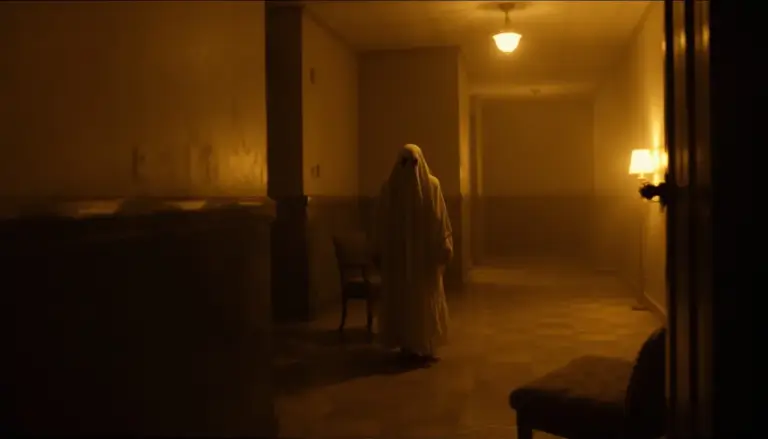
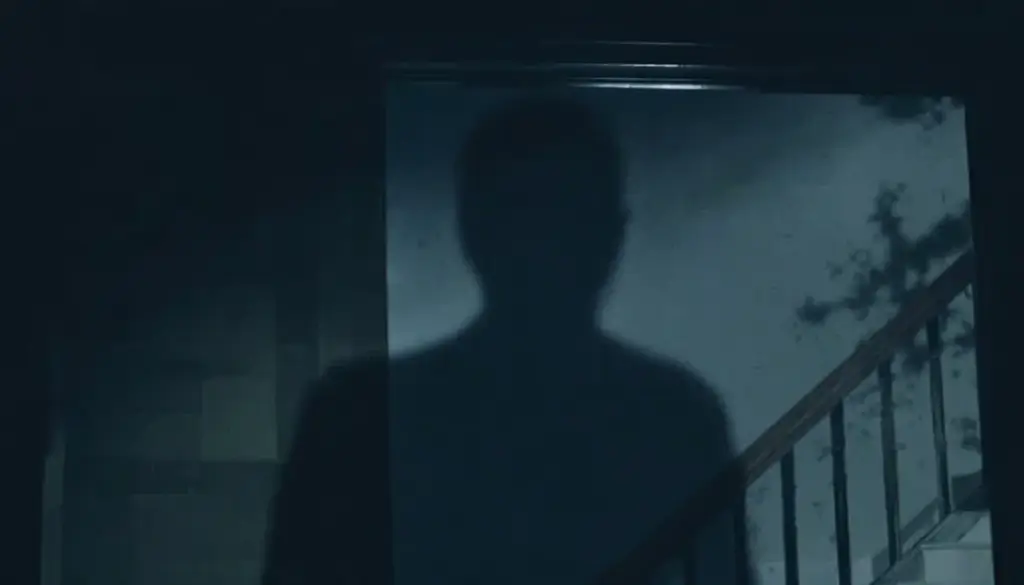
At some point — and the eight witnesses who came forward for this piece each described it slightly differently, which I find, on balance, more credible than if they hadn’t — the corner stops being a corner. It becomes an arrangement. A preference. A location that has been, in the terminology I’ve started hearing from people who should probably not have to use this terminology professionally, claimed. The shadow person in question is not moving. It has indicated, through what interior design consultant Fiona Dreich of Edinburgh describes as ‘a sustained and clarifying presence,’ that it will not be. The question facing the people who still live in the room is therefore not one of removal. It is one of composition.
I want to be careful here, because I know how these things are read by people who have not yet had a corner taken from them. I am not suggesting capitulation as a lifestyle. I am reporting on what is happening in a growing number of households — the figure Dreich cites is conservative, and I believe her when she says she’s being conservative — where the standard options have been considered and set aside, and where the people involved are now, with varying degrees of equanimity, arranging their furniture around something that does not sit in it. This is not a new situation. It is a newly documented one. There is a difference, and I think it matters.

What The Design Community Is Calling It (And What I Would Call It Instead)
Dreich’s practice, which she established in 2019 and which now includes a quiet but apparently busy subspeciality in what her website refers to as ‘spatially complex interiors,’ has developed a set of working principles for rooms in which one area has been rendered, in her phrase, non-negotiable. The language is deliberate. She told me, over a call during which I could hear what I will diplomatically describe as a second ambient presence in her consultation room, that calling it an ‘occupied zone’ had caused distress to clients, whereas ‘non-negotiable’ implied a process of discussion that had simply reached its natural conclusion. I understand what she means. I would personally call it the corner that belongs to what is in the corner, but I am a journalist and not a consultant, and she is billing by the hour.
We stopped thinking about it as a loss of space and started thinking about it as a load-bearing constraint, like a chimney breast. You design around the chimney breast. You don’t argue with the chimney breast. This is not so different, except that the chimney breast does not have preferences about lamplight.
— Fiona Dreich, Principal, Dreich Interiors, Edinburgh
Of the eight witnesses, six are still living in the affected rooms. This is worth noting. One relocated to the kitchen, which I am told has its own separate situation developing near the larder, and one has moved in with a sister and prefers not to discuss it. The six who remain describe an adjustment period ranging from three weeks to — in the case of a retired archivist in Inverness who submitted a handwritten account of eleven pages, which I have read in full and which I will be returning to in a separate piece — fourteen years. The archivist notes, with the precision of someone who spent a career cataloguing things that don’t fit into standard categories, that the entity has never once moved from its corner, has not interfered with any object, and has not, to her knowledge, been interested in anything beyond the doorway it can observe from that position. She has arranged her reading chair accordingly. She says the light is actually better there now. I believe her.
⚠️
FIELD ALERT
If the corner in question is in a room that also functions as a sleeping space, do not attempt to reposition furniture toward the corner in order to ‘normalise’ the area. Three of the eight witnesses attempted this. All three described an immediate and unambiguous communication of objection. Dreich’s current guidance — which I am including here because it is practical and she offered it without being prompted — is to leave a minimum of four feet of clear floor between your nearest piece of furniture and the claimed area, keep overhead lighting in that zone switched off after dusk, and avoid making direct visual reference to the corner for the first several weeks of whatever accommodation you are reaching. She calls this ‘the settling period.’ I have heard this phrase in other contexts and I think it applies.
The Practical Question, Which Is Also The Only Question Most People Actually Have
What you do with the rest of the room depends on the room, but Dreich’s principles resolve down to a few consistent points that I found, having sat with them for several days longer than my editor would prefer, both sensible and oddly familiar. Orient your primary seating so that the occupied corner is not within the habitual sightline of anyone seated in the room’s main position. This is not, she clarifies, about denial. It is about not making the entity the focal point of the room, which creates a dynamic she describes as ‘unhelpful for both parties,’ and which I would describe as the kind of sustained mutual awareness that benefits no one. Place your lighting with this in mind. Warm, low, directional. Nothing that throws the corner into high relief. Consider the room’s function and whether it is one the entity appears to find stimulating. Two of the eight witnesses reported increased activity on evenings when they had guests. One of those witnesses has stopped having guests. The other has informed her guests in advance, which she says has sorted out, with some efficiency, who her real friends are.
FAST FACTS
• Eight witnesses reported an entity with a fixed, stationary corner presence — none described lateral movement across the room.
• Fiona Dreich’s practice has handled what she estimates as ‘several dozen’ spatially complex interior consultations since 2021; she declined to give a precise figure.
• Of the six witnesses still occupying the affected room, five reported that the presence has remained stable and non-escalating following a period of spatial accommodation.
• Dreich does not offer removal services and states she has never been asked to. She finds this notable. So do I.
• The non-negotiable corner, in all eight cases reported to WTC, was a corner that faced a doorway.
I rearranged everything toward the window wall. New rug, the sofa moved, plants along the sill. Genuinely, it’s the nicest the room has looked since we moved in. I still don’t go in there after ten. But the room itself is lovely.
— Witness, name withheld by request, Harrogate
I have not personally had a corner taken from me, though I am aware that this is a sentence I should probably not write with too much confidence in a house that has been standing since 1887 and whose cellar notes I have read and filed accordingly. What I can say, having spoken to the people who have, is that the experience described is less one of fear — fear comes early and, according to most of them, passes — and more one of renegotiation with a space you thought you understood. The room is still yours. The room is still usable. It has simply acquired an anchor point you did not select and cannot move. People manage worse constraints than this, and they do so every day. The difference is that most constraints do not watch the doorway. Most constraints do not have preferences about lamplight. Most constraints, given the right furniture arrangement and a settling period of honest and unsentimental adjustment, can be absorbed into the life of a room without defining it. That is what Dreich is building a practice around. That is what six out of eight witnesses have, by their own account, achieved. I find it, on the whole, a reasonable response to an unreasonable situation. Ptolemy, for what it’s worth, would agree with me. He has been watching the doorway of my filing room since Tuesday, and I have, accordingly, rearranged my reading chair. The light there is actually quite good.
evelyncrowe@whatthecryptid.com
Evelyn Crowe · Opinion Columnist — WTC

Observed in 47 countries. Yet to explain themselves.