
|
Credibility: ★★★★★ 5/5
|
Threat Level: EXTREME (EXTREME — and I cannot stress this enough)
A pothole assessment in the Gobi Desert ended with one dissolved engineer and twenty-one witnesses who are no longer employed, technically speaking
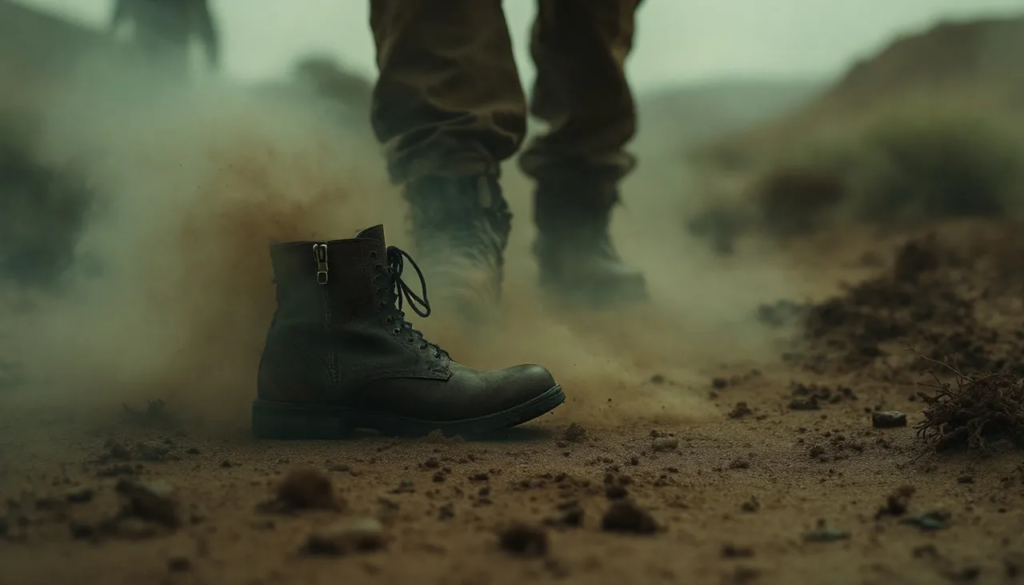
SOUTHERN GOBI DESERT — A Department of Transport road survey scheduled to take approximately four hours and produce approximately zero newsworthy outcomes instead produced what eyewitnesses are describing as a large, red, acid-secreting worm the diameter of a sewer main breaching the hardpan surface of the Gobi Desert at eleven-fourteen in the morning on Tuesday, local time, dissolving lead engineer Batbayar Gantulga from the boots upward over a period witnesses estimate at between eight and twelve seconds, and then returning underground before anyone on the crew had the presence of mind to do anything useful. I am standing on the site right now. The boots are still here. I have photographed the boots. The boots are going in the notebook.
The survey crew — twenty-one individuals contracted by the Mongolian government to assess road degradation along a secondary transport corridor that services, according to the project brief I obtained from a man at a fuel stop who asked me not to say where I got it, approximately seventeen vehicles per week — have been placed on administrative leave pending what the Department of Transport is calling an ‘incident review’ and what I am calling the most significant cryptozoological surface breach in recorded infrastructure history. The phrase ‘technically on leave’ appeared in the official communications twice. I counted. The Department has not confirmed whether ‘technically’ is doing load-bearing work in that sentence or whether it is just bureaucratic hedging, which is a distinction I find extremely relevant and which no one will return my calls about.

What The Crew Saw, In The Order They Saw It
According to accounts I gathered from four members of the crew — the other seventeen have declined to speak on record, which I respect but am also continuing to pursue — the sequence of events began with a subsurface vibration described variously as ‘like a truck passing that wasn’t there,’ ‘wrong,’ and, from one witness who I will not name because he made me promise, ‘the ground breathing, but angry.’ Gantulga reportedly knelt to examine a surface fracture consistent with thermal expansion, which is the kind of thing that gets you killed in this line of work and also, apparently, in road surveying. The worm emerged within arm’s reach. The acid came before the worm was fully clear of the surface. The crew ran. The worm went back down. The whole thing, start to finish: under ninety seconds. Gantulga’s clipboard was not dissolved. It is six feet from the boots. I have also photographed the clipboard.
It came up like it already knew where he was standing. Like it had been waiting. I have been doing road surveys for eleven years and the ground has never waited for anything.
— Crew Member, identity withheld, Southern Gobi survey team
FIELD ALERT
The Mongolian Death Worm — Olgoi-Khorkhoi in Mongolian, meaning ‘large intestine worm,’ which is accurate and upsetting — has been reported in the Gobi since at least the 1920s and has appeared in WTC documentation going back to our 2017 deep-file review. Known attributed capabilities include acid projection and, in some accounts, electrical discharge at range. This is the first confirmed surface breach during an active government work operation with a documented casualty and a surviving witness count above five. I want to be precise about what ‘confirmed’ means here: I am confirming it. I have the boots. I have the clipboard. I have four witnesses and seventeen more I am still working on. That is my standard.
FAST FACTS
• Location: Secondary transport corridor, Southern Gobi Desert, Mongolia
• Time of breach: 11:14 AM local time, Tuesday
• Crew size: 21 personnel
• Casualty: 1 confirmed (lead engineer Batbayar Gantulga, 44)
• Remains recovered: Boots. Both of them.
• Brech duration: Estimated 60–90 seconds surface exposure
• Department of Transport response time to my first call: 47 hours, no comment
• Department of Transport response to my fourteenth call: hang-up, which I am counting as a comment
There is no protocol for this. We have protocols for equipment failure, for worker injury, for acts of God. The form does not have a field for ‘worm.’ I looked. There is no field.
— Dorj Lkhagvasuren, Deputy Director of Road Infrastructure, Mongolian Department of Transport — reached by phone, speaking before he realized I was recording
The Department of Transport has issued a statement describing the incident as ‘under active investigation’ and has suspended survey operations along the corridor ‘as a precautionary measure pending environmental assessment.’ The statement does not use the word ‘worm.’ It does not use the word ‘acid.’ It uses the phrase ‘unexpected geological event’ four times, which is the kind of language that makes me open a new page in the notebook and underline things. I have filed three separate information requests. I have been told the requests are being processed. I called Claudia on Sunday and described the situation and she said, and I’m quoting her directly, ‘Rico, please eat something,’ which is her way of saying she is worried, which means I am on the right track.
I am going to stay on this one. I have two cases of Dragon Ice left in the truck, the site has not been formally restricted yet although a man in a Land Cruiser with government plates has been parked approximately four hundred meters east of me for the last three hours and I have waved at him twice and he has not waved back. The boots are bagged. The clipboard is bagged. I have GPS coordinates for the exact point of surface breach and I have a contact at a geology department in Ulaanbaatar who has agreed to review my soil samples if I do not tell anyone he agreed. The twenty-one witnesses are on my list. Seventeen of them are outstanding answers. Outstanding answers are what this job is. I have been carrying that notebook since 2015 and it is not full yet.
ricovalez@whatthecryptid.com
Rico Valez · Frontline Field Correspondent — WTC

Subterranean. Lethal. Named with admirable honesty.