|
Credibility: ★★★★☆ 4/5
|
Threat Level: MODERATE (Moderate — to your earnest, your timeline, and your asking price.)
Three deals collapsed in California’s Central Valley after buyers reviewed Ring camera footage during due diligence. Real estate attorneys are now recommending sellers review this list before disclosure season. You’re welcome.
In the past eighteen months, twenty witnesses across Fresno County have logged what they describe as a two-legged, leggy, no-torso-to-speak-of entity moving through yards in a gait that multiple people have independently compared to a pair of pants with opinions. The Fresno Nightcrawler is not new. The footage is not new. What is new, according to real estate attorneys now fielding calls from both sides of the table, is that smart home cameras have made the evidence searchable, timestamped, and readily available during due diligence. This has created a situation that the Central Valley real estate market was not fully prepared for, and I say this as someone who has been watching Nightcrawler footage in her apartment on a Tuesday night for the better part of four years. I was prepared. The escrow process was not.
What follows is a ranked list of indicators that your property may fall within an active Fresno Nightcrawler patrol route, ordered from least to most likely to make a buyer’s attorney send a very specific email. I want to be clear that this ranking is based on twenty witness accounts, three collapsed transactions, and my own working knowledge of what the average buyer is going to find alarming versus merely interesting. Not everyone finds this alarming. I personally find it fascinating. I am, however, not buying your house.

The Ranked List (Start Here Before Your Open House)
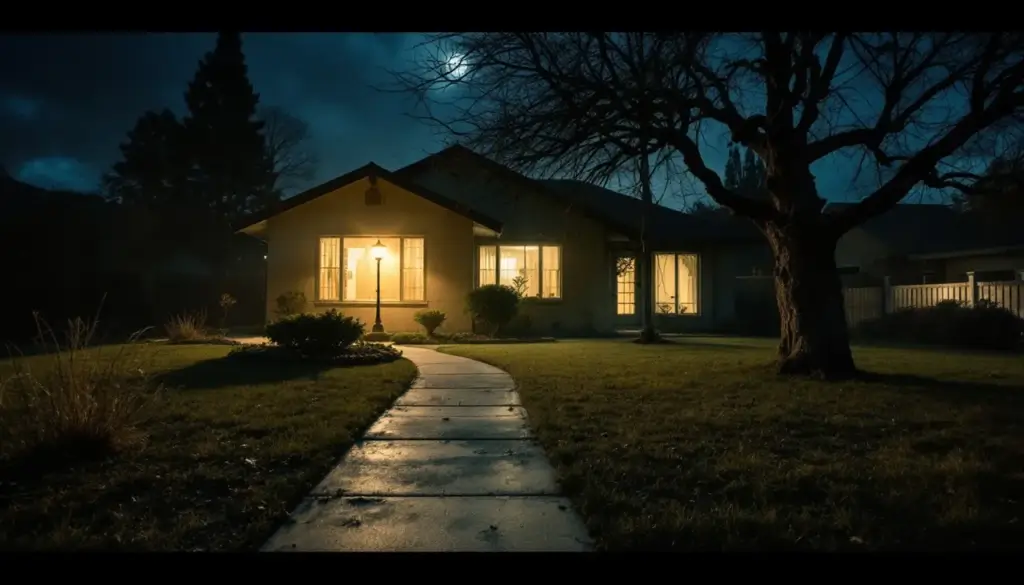
#7 — Your motion-activated lights trip at 2–4 AM with no corresponding heat signature on the thermostat camera
Lowest impact on resale, mostly because buyers without a specific reason to look for it will attribute this to raccoons, a branch, or their own unexamined anxiety about raccoons. It registers as ambiguous on camera footage, it photographs ambiguously, and an ambiguous home inspection addendum is the kind of thing a buyer can talk themselves out of. Worth noting, but you’re probably fine. Disclose anyway. This is advice I’m giving you for free and that the attorneys are billing $400 an hour to also give you.
#6 — Grass impressions that are too far apart for a human stride and too narrow for anything with normal proportions
This starts to matter when a buyer does a walkthrough and their agent is paying attention. Most agents are not paying attention to grass impressions in the way that I am paying attention to grass impressions, which is a gap in the industry I think about. However, if the buyer has done any preliminary research on the property address — which they are increasingly likely to do, because we live in an era where people Google the previous owners of a used couch — and the address appears in a community forum alongside the phrase ‘weird long legs,’ the grass impressions will retroactively become significant. Documents everything, is what I’m saying.
#5 — Neighbor has mentioned, more than once, unprompted, that something moves through the yards at night
Neighbors who bring this up once during a casual conversation are delivering a warning. Neighbors who bring it up more than once are delivering a report. Buyers meet the neighbors. Buyers chat over the fence during the open house. I have spoken to enough people who bought a house and later learned the neighborhood had context that nobody formally conveyed to them, and every single one of them used the word ‘betrayed.’ Sellers who get ahead of this fare considerably better emotionally and financially than sellers who do not, and I feel very confident saying that in print.
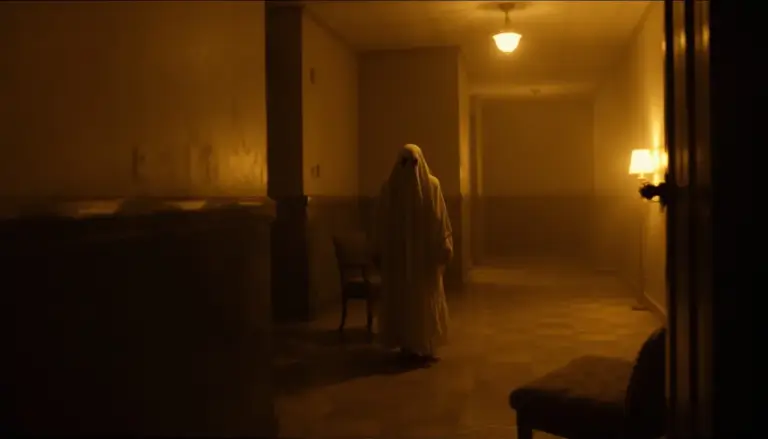
#4 — Ring or Nest footage contains a timestamp cluster between 1:47 AM and 3:15 AM showing an entity that a reasonable person would describe as ‘walking but wrong’
This is where the three collapsed transactions lived. During due diligence, buyers are now reviewing home camera archives the way they review HOA minutes and flood zone maps, and footage of a Fresno Nightcrawler — that specific gait, those specific proportions, no visible torso, moving with what witnesses consistently describe as ‘purpose’ — is not footage a buyer can unsee before signing. Two of the three collapsed deals involved buyers who specifically said they were not opposed to the cryptid itself but were concerned about what repeated nocturnal entity traffic implied about long-term yard maintenance. I’m not here to adjudicate that reasoning. I’m here to tell you it’s happening.
#3 — The footage cluster spans multiple consecutive nights, suggesting a route rather than a one-time event
A one-time anomaly on camera is a conversation. Three or more nights within a two-week window is a pattern, and patterns are what attorneys put in letters. Route behavior implies that the property is not incidentally in the way of something — it is specifically on the itinerary of something. The distinction matters to buyers in a way that is, actually, quite reasonable when you think about it from their perspective, which I have done, sitting in my apartment, surrounded by more Nightcrawler reference materials than is probably necessary for a single person, with my cat.
#2 — The footage has already been posted online and the property address is inferable
At this point the conversation has moved from ‘should I disclose this’ to ‘I should have disclosed this.’ Once footage is indexed, it is findable. Once it is findable, a buyer who runs a reverse image search or a property address search through the community forums that I monitor professionally — and there are several, and they are quite thorough — will find it without any help from the seller. The gap between what a buyer discovers independently and what appeared in the seller’s disclosure is not a gap that anyone in the transaction enjoys explaining. This is number two on the list and not number one only because of what number one is.
#1 — The footage has been posted online, is indexed, the address is inferable, and the post has over 200 upvotes
This is, to be plain about it, a known property now. It has a community. There are people who have bookmarked it. Some of them are in this publication’s readership, which I say not critically but as a factual characterization of our audience demographics. A buyer’s agent doing routine due diligence will find a 200-upvote post in a cryptid sighting forum before they find a three-upvote post, because the internet works by visibility, and visibility is now a material fact of the sale. At least two of the twenty witnesses whose accounts inform this article are aware of properties that fit this description. The attorneys I spoke to — who asked not to be named but who were very forthcoming — described this scenario as ‘the one we’re now writing standard language for.’ If your house is this house: disclose, price accordingly, and consider that there is a buyer out there who will see this as a feature. I mean that genuinely. They are real. Several of them read WTC.
None of this, I want to be clear, is an argument against living within a Fresno Nightcrawler patrol route. I live in Portland, where the Burrow coffee shop has a standing cryptid sighting board and my car has bumper stickers I haven’t fully reviewed since 2022, and I consider my proximity to the unusual to be a net positive. But the disclosure forms that govern the sale of real property were written by people who were not thinking about this, and the buyers sitting across the closing table are now, in some cases, thinking about nothing else. The gap between those two positions is where the attorneys currently live, and where this list came from, and where I expect to be reporting from for the foreseeable future. My notebook system has a whole color for Central Valley property law. It’s the orange one. I’ve used it twice.
pennyhart@whatthecryptid.com
Penny Hart · Features Writer & Community Content Specialist — WTC
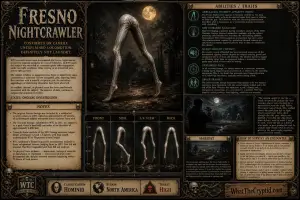
Documented on camera. Still unexplained. Appears to be just walking.