|
Credibility: ★★★★☆ 4/5
|
Threat Level: MODERATE (Moderate — bees are fine, probably)
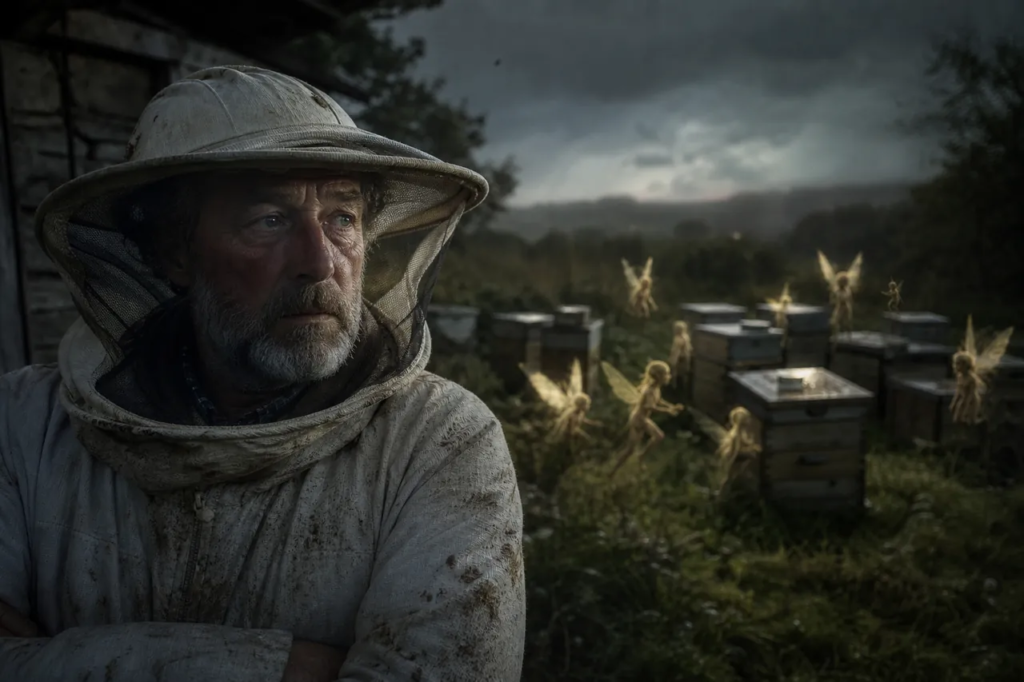
A Devon beekeeper’s third submission under Policy Exclusion Clause 14(f) is either the most thorough fae interference documentation ever filed or a masterclass in descriptive insurance fraud. WTC is going to go ahead and say it’s the former.
There is a clause in at least one UK agricultural insurance policy — I have now read it four times, the most recent at 11:47 PM on a Tuesday with Mr. Whiskers asleep on my research notebook — that covers losses attributable to ‘Non-Human Interference of Fae Classification.’ It is Policy Exclusion Clause 14(f). It exists. It is real. The fact that it is an exclusion clause and not a coverage clause is the kind of detail that keeps me up at night and also, apparently, is keeping one beekeeper in Devon up at night, because this is the third time he has filed under it.
The claim, which WTC obtained through a source who has asked to be identified only as ‘someone who works adjacent to insurance in a professional capacity,’ lists six specific indicators observed at the apiary. Six. In writing. With a named assessor who took a photograph of a flower he then declined to describe in the written report. I want to be very clear that I find this man’s decision to be simultaneously the most professionally defensible and personally infuriating choice in this entire incident. The photograph exists. The flower was there. He saw it. He chose silence. We move on.
The Six Signs, As Filed
Inverted Hive Lids
Every lid on the apiary’s active hives was found inverted — turned upside-down and replaced with apparent care, in that none were damaged and all were still properly seated. The claim notes this was discovered at first light. Standard vandalism typically involves lids on the ground. Whatever inverted these lids also, apparently, had the consideration to put them back. This is either deeply unsettling or weirdly polite, and I have been thinking about the distinction for three days.
Honey in Geometrically Impossible Configurations
This is the phrase used in the actual submitted document. ‘Geometrically impossible configurations.’ I contacted a structural engineer I know — we met at a conference, different kind of conference, long story — and he confirmed that honey, as a viscous fluid subject to gravity, does not self-arrange into stable geometric forms without external scaffolding. The claim does not describe what the configurations looked like, which I find unconscionable. The assessor’s notes say only ‘see attached photograph 3.’ Photograph 3 was not attached to the version of the document I received. I am dealing with this emotionally.
Bees Exhibiting Non-Standard Flight Patterns
The claim specifies that the hive’s bees were observed performing ‘flight patterns inconsistent with known foraging logic’ for approximately four days following the incident, before gradually returning to normal behavior. Six witnesses — the beekeeper, two family members, and three neighboring farmers who came to look — confirmed this. I reached out to an apiarist for comment. She said that bees do not, under any normal circumstances, do that. She then asked me not to quote her by name because, and I am quoting her directly here, ‘I have a reputation to maintain and also I don’t want to think about what this means.’
Pollen Distribution Inconsistent With Local Flora
The loss claim includes a pollen analysis — which, to be clear, means this man had a pollen analysis done, submitted it to his insurer, and his insurer has it on file — identifying trace amounts of pollen from three plant species not found within the bees’ standard foraging radius. One species is native to Cornwall. One is native to Ireland. The third the analysis returned as ‘unknown, possibly ornamental.’ The Common Pixie has a documented association with leading pollinators across ranges that don’t follow roads or property lines or any other human organizational system, and I’m just going to leave that there.
A Structural Honey Loss of Approximately 12%
The apiary sustained a quantifiable honey loss across three hives — approximately 12% of stored product — with no evidence of breach, equipment failure, animal interference, or theft. No tracks. No damage. No sign of entry by anything with a body mass that would register on the soft ground surrounding the hives. The claim estimates the financial loss and then, in a separate line, notes that the remaining honey ‘smelled different for approximately one week.’ The assessor’s response to this detail was to write, in his official notes, ‘noted.’ Just that. Noted. I respect him more than I can say.
The Flower
A single flower was found placed on the apiary’s weigh scale — the equipment beekeepers use to monitor hive weight — at a position that would have required it to be set there deliberately, balanced upright, stem down. The assessor photographed it. He logged the photograph. He did not describe the flower’s species, color, condition, or any other attribute in the written report. When the beekeeper was asked about it by a family member — this detail comes from the witness statements, not the claim itself — he said he’d rather not. That’s the complete record. The flower was there. Nobody wants to talk about the flower. We at WTC are talking about the flower.
The honey smelled different for approximately one week. I don’t know how to classify that and I’m not going to try.
— Apiary Assessor, written field notes (official claim documentation)
FAST FACTS
• Policy Exclusion Clause 14(f) covers ‘Non-Human Interference of Fae Classification’ — meaning the insurer acknowledges the category exists but will not pay out for it.
• This is the beekeeper’s third filed claim under this clause. The first two are not public record. He has been keeping bees for twenty-two years.
• Six witnesses confirmed the anomalous bee flight patterns. None of them are named in the claim. The assessor is the only named party, and his flower silence is now semi-famous in a very specific corner of the internet.
I want to be responsible about this. The claim was not paid — Clause 14(f) is an exclusion, not a coverage provision, which is a sentence I have genuinely needed a moment with — and the beekeeper filed an appeal that is, as of the time of writing, still pending. Six people watched those bees flying wrong. An unknown pollen was found. Twelve percent of the honey is gone with no physical explanation. The flower happened. I am not in the business of telling people what conclusions to draw, but I will note that the assessor took the photograph before he decided not to describe it, which means some part of him thought it was worth having on record, and that part of him was right.
FIELD ALERT
If you keep bees in an area with documented fae activity — Devon, Cornwall, and several counties in Ireland are currently flagged in our region file — WTC recommends reviewing your policy documentation for exclusion clauses before you need them. Check specifically for 14(f) or equivalent language. If your policy doesn’t have it, that may not be the reassurance it sounds like.
I’ve been keeping bees for twenty-two years. The bees know something happened. I don’t need the insurance company to tell me what.
— Devon Beekeeper, third-party witness statement, name withheld by request
The assessor’s photograph of the flower is photograph four in the official file. Photograph three — the geometric honey configurations — was not included in the documentation forwarded to WTC. I have submitted a formal records request. I have also, in the interest of full transparency, put it in the folder on my laptop called REAL ACTUAL EVIDENCE, which currently has 847 files in it, and I know where this one is. I have it flagged. I am watching the inbox. The flower was there, and whoever put it there on a weigh scale in Devon at some point between dusk and first light knew exactly what they were doing, and the bees knew too, and for four days they flew differently because of it, and I think that matters even if no one is going to pay out for it.
pennyhart@whatthecryptid.com
Penny Hart · Features Writer & Community Content Specialist — WTC
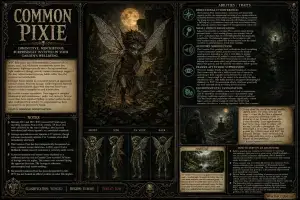
Small. Documented. Responsible for more than you think.