|
Credibility: ★★☆☆☆ 2/5
|
Threat Level: LOW (LOW — to the ranch. Unclear re: the marriages.)
Dr. Anita Felch of Denver finds that shared Skinwalker Ranch trauma makes for an unusually durable romantic foundation, which is either heartwarming or a separate problem entirely
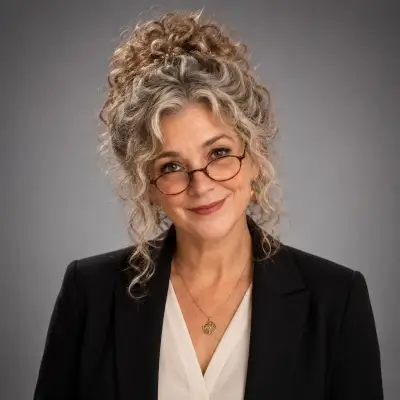
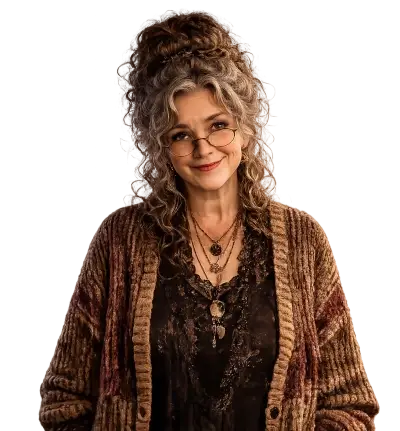
Dr. Anita Felch, a licensed couples therapist operating out of Denver, Colorado, has reported that nearly thirty percent of her new client intake this quarter involves couples who met not through conventional channels — apps, workplaces, the specific kind of dinner party where someone brings a boardgame — but at cryptid survivor support groups, with a disproportionate concentration among attendees of Skinwalker Ranch-adjacent meetups. She made this observation public at a regional mental health symposium last Thursday, apparently after some deliberation, and I want to be clear that the WTC News Network takes the clinical dimensions of this development seriously. We do. We also have eight witnesses. We are working with what we have.
The Bond Is Described As Concerning
Dr. Felch’s primary concern — and I will represent this accurately because she was quite specific — is not that the couples met at a support group. Therapeutic environments produce community. That is, broadly speaking, the point. Her concern is the quality and character of the attachment that forms when two people have sat across from one another in a church hall in rural Utah and compared notes on what they each saw standing at the edge of the property line. "The bond," Dr. Felch told the symposium, and I am quoting from the published transcript here, "is strong in a way I find difficult to locate in my training." She paused at that point, according to a colleague who was present. The pause was noted by several attendees.

They have already survived something together that neither of them can fully describe to anyone outside the relationship. That creates a closed system. Therapeutically, a closed system is not something I’d typically celebrate.
— Dr. Anita Felch, Licensed Couples Therapist, Denver, CO
This is, from a purely observational standpoint, not entirely surprising. I have attended enough county archive sessions and enough Tuesday afternoons with people who study things at the edge of documented experience to understand that shared witness produces a particular kind of gravity. People who have stood in the same dark and come away with the same unresolvable questions tend to locate one another quite efficiently afterward. The difficulty, as Dr. Felch identifies it, is that the relationship often functions as a second support group rather than a partnership in the conventional sense, with each person reinforcing the other’s account in ways that are emotionally stabilising and clinically complicated. She is treating this with care. I respect that.
FIELD ALERT
WTC is aware of at least four active Skinwalker Ranch survivor support groups operating along the Colorado-Utah corridor. Three have confirmed social events. One has a waiting list. If you are attending any of these groups for journalistic purposes, please file a location update with the desk before the meeting begins and again afterward. This is standard protocol. It is not specific to this story.
What The Eight Witnesses Said
WTC spoke with eight individuals currently in or recently emerged from relationships that began at cryptid-adjacent support meetings. Seven declined to be named. The eighth, who gave his name as Marcus and said he met his partner Denise at a Skinwalker Ranch survivors’ group in Steamboat Springs, described the experience of finding a partner there as "obvious, in retrospect — we were the only two people in the room who’d both seen it from the north field side." He and Denise have been together for three years. They are not in couples therapy. They described this as because they "don’t really disagree about anything foundational." Marcus said this plainly, without apparent irony, and then offered me a biscuit from a tin he had brought to the interview, which I accepted. It was a good biscuit. I am including this detail because it seems relevant to his general character.
I’m not saying love can’t come from a difficult experience. I’m saying that when the difficult experience is ongoing, unverified, and still actively discussed at the dinner table, I have additional questions about the therapeutic framework I’m being asked to work within.
— Dr. Anita Felch, Licensed Couples Therapist, Denver, CO
FAST FACTS
• Dr. Felch has been in practice for fourteen years. This is her first public statement about cryptid-adjacent intake.
• Nearly 30% of Dr. Felch’s new couples clients this quarter met at paranormal or cryptid support group settings.
• Of the eight WTC witnesses: seven declined to be named, one brought biscuits, zero reported relationship regret.
• Skinwalker Ranch survivor support groups have been documented in at least six states. Colorado, Utah, and Wyoming account for the majority of known active groups.
• The Steamboat Springs group meets on the second and fourth Wednesday of each month. Attendance has reportedly increased since 2022.
Dr. Felch has said she is not intending to stop taking these clients. She is, she clarified, intending to develop a more adequate framework for working with them, which she described as a "gap in the literature" she is now apparently obligated to address. She sounded, in the symposium transcript, like someone who had expected a quieter quarter. I recognise the tone. I have heard it in my own voice, on occasion, usually in the car park of the quarry at dusk, when the readings come back differently than the previous month’s and I have to decide whether to drive home and file a report or simply sit with the information for a while with the thermos. Sometimes both things are true at once. Sometimes a thing is clinically complicated and also, quietly, fine. Dr. Felch’s couples, by her own account, are not in crisis. They are in love, specifically, in the way that people are when they have looked at the same thing in the dark and chosen to stay. That is, on balance, something.
evelyncrowe@whatthecryptid.com
Evelyn Crowe · Opinion Columnist — WTC