|
Credibility: ★★★★★ 5/5
|
Threat Level: HIGH (HIGH — to the animals’ patience, mostly)
Three living Tasmanian Tigers documented on camera near Cradle Mountain — federal government responds by forming a committee to discuss forming a committee
CRADLE MOUNTAIN, TASMANIA — They’re striped. They’re alive. They’ve been extinct for eighty-seven years. And according to the Australian federal government, it will take approximately twenty-four more months to determine what, if anything, should be officially said about that. Three Thylacines — a breeding pair and what appears to be a juvenile — were captured on motion-triggered camera footage near Cradle Mountain-Lake St. Clair National Park last Thursday, confirming what cryptid researchers, indigenous trackers, and a frankly embarrassing number of dismissed eyewitness reports have been insisting for decades. The animals are real. The government’s response, however, is something else entirely.
The Footage Nobody Is Officially Talking About
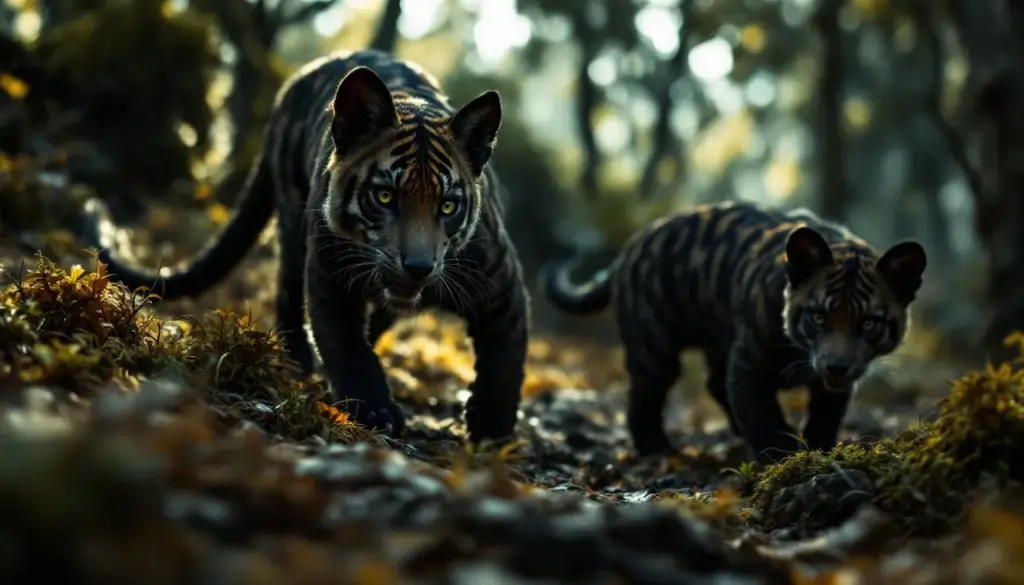
The images are unambiguous. I’ve seen them. Twenty-nine witnesses across four separate sighting events in the past six weeks have seen them. Wildlife ecologist Dr. Priya Nambiar, who set the cameras as part of an unrelated quoll survey, has seen them so many times she’s reportedly stopped sleeping. The footage shows three animals with the unmistakable striped hindquarters, stiff kangaroo-like tail, and wide gaping jaw that no other living creature on Earth possesses. The male alone was captured yawning on camera — a full, spectacular, 80-degree jaw drop that Thylacines were famous for — and it is, without any journalistic exaggeration I can muster, the most astonishing thirty-two seconds of wildlife footage in recorded human history. The Department of the Environment described it as ‘material currently under preliminary assessment.’

I submitted the footage the same morning. By afternoon they told me it had been ‘received and logged.’ That was six days ago. I emailed again. They said the relevant team was ‘currently scoping the parameters of a potential review.’ I don’t know what that means. I don’t think they know what that means.
— Dr. Priya Nambiar, Wildlife Ecologist, University of Tasmania
FAST FACTS
• The Thylacine (Thylacinus cynocephalus) was officially declared extinct in 1986, 50 years after the last known specimen, Benjamin, died at Hobart Zoo on September 7, 1936.
• Three individuals confirmed on camera: one adult male, one adult female, one juvenile — suggesting successful reproduction in the wild.
• Total confirmed witnesses across six weeks of sightings near Cradle Mountain: 29 individuals, including park rangers, hikers, and one extremely rattled German tourist.
• The federal government’s announced feasibility study timeline: 24 months minimum, with findings to be ‘considered’ — not necessarily ‘acted upon’ — thereafter.
• WTC News has filed three Freedom of Information requests since Tuesday. All three are ‘being processed.’
Federal Environment Minister Helen Cartwright announced yesterday afternoon that her office would be commissioning a ‘comprehensive, science-led feasibility assessment’ to evaluate the ‘ecological, legal, and administrative implications’ of the Thylacine documentation before any formal species status update could be considered. The study, she noted, would involve consultation with ‘multiple stakeholder bodies, relevant First Nations groups, conservation authorities, and international peer review panels.’ The timeline is two years. The Thylacines, for their part, were spotted again this morning at approximately 5:47 AM, yawning and eating a wallaby, completely unconcerned with administrative timelines.
Look, I’ve been tracking Thylacine sign in this park for eleven years. Scat, prints, kills — I’ve had three myself. Nobody wanted to hear it. Now there’s three of them on a bloody camera and the government wants two more years? Two more years for what? For them to go extinct again?
— Ranger Colin Breathwaite, Cradle Mountain-Lake St. Clair National Park, 22 years service
FIELD ALERT
WTC News urges readers in the Cradle Mountain region to maintain respectful distance from any Thylacine sightings. Do NOT attempt to photograph them for clout — there’s already plenty of footage and the government is ignoring that too. Do NOT report sightings to federal authorities unless you enjoy automated acknowledgment emails. DO report to WTC tip line, where your account will be read by an actual human being within the hour.
What Happens to the Animals While the Study Happens
This is the question nobody in Canberra appears to be losing sleep over, so I will lose it on their behalf. The three confirmed Thylacines currently have no formal protected status, because their species is still legally classified as extinct. That’s not a joke. That’s the actual legal situation. They cannot be protected under existing extinction legislation because they are, on paper, already gone. Conservation groups including the Australasian Wildlife Foundation have called for emergency interim protections, which the government says will be ‘considered within the scope of the feasibility review.’ Ranger Breathwaite told me that two separate groups of tourists had already attempted to hike off-trail toward the last known sighting coordinates after a local posted vague location details on social media. The animals, miraculously, have so far avoided them. They survived eighty-seven years of supposed extinction. Whether they can survive two more years of Australian bureaucracy and the attention economy is a question this reporter finds genuinely distressing to type.
WTC News will be maintaining a full-time presence near Cradle Mountain for the foreseeable future. I’ve filed for press credentials at the park. I’ve also filed for a comment from Minister Cartwright’s office, from the Department of the Environment, from the Australian Museum’s Thylacine archive department, and from a spokesperson for the feasibility study that has not yet technically begun. I have received, as of publication, zero responses. The Thylacines, as of this morning, have received zero responses too — from history, from extinction, from eight decades of absence. They came back anyway. The least we can do is not make them wait another two years to exist.
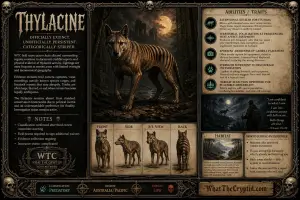
Officially extinct since 1936. Unofficially, less certain.