|
Credibility: ★★★★★ 5/5
|
Threat Level: HIGH (HIGH — and apparently uninsurable)
A property management firm’s internal memo has given us something rare and beautiful: a bureaucratic paper trail for a haunting, complete with a rider that one broker called ‘philosophically troubling.’
I have been covering cryptid and paranormal activity for long enough that very little surprises me anymore. I have stood in a field in rural Kentucky at 2 a.m. waiting for a Dogman. I have interviewed a man who maintains that a Fresno Nightcrawler attended his daughter’s soccer game. I have a folder on my laptop called REAL ACTUAL EVIDENCE that contains 847 files. What I did not expect, in all of that, was to be handed a seventeen-page internal memo from Cascade Property Solutions LLC that constitutes the most methodical, cross-referenced, and actuarially rigorous documentation of a haunting I have ever seen. The ghost in unit 4B of the Elsinore Arms apartment complex on NE Failing Street in Portland has, per this memo, affected the building’s insurance premiums in seven distinct and documented ways. I read it twice at The Burrow. I contributed a new entry to the sighting board. Then I called eighteen people.
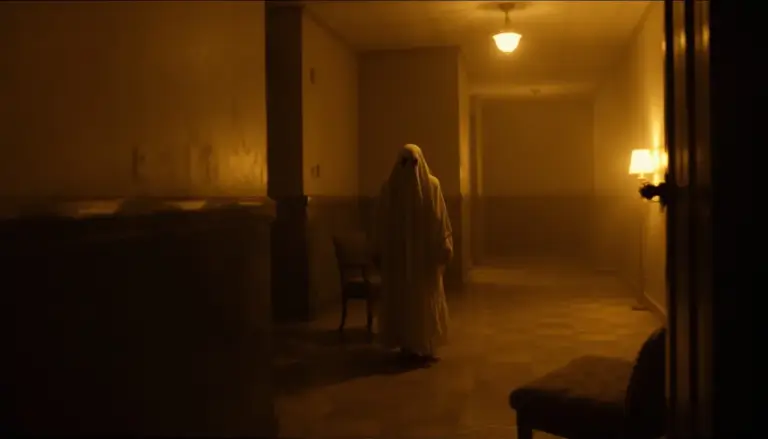
The Elsinore Arms is a twelve-unit building constructed in 1927, which, if you are doing the math, is old enough to have opinions. Unit 4B has been vacant since March of last year, following the departure of tenant Rosalind Fehr, who declined to comment for this article but whose neighbor in 4A, a retired postal worker named Gerald Obumseli, described her exit as ‘very fast, very decided, and accompanied by a large amount of bubble wrap.’ The activity in 4B — which involves repeated cold-spot reports, a persistent knocking that follows no structural explanation, two documented incidents of a rocking chair moving without provocation, and one episode described in the memo as ‘unsanctioned illumination of decommissioned light fixture’ — has generated enough insurer correspondence that Cascade Property Solutions eventually hired a broker who, by his own admission on record, had to look several things up.
The Seven Ways, As Documented
The Cold-Spot Pipe Claim Cascade
This is where it started. In October, a plumber called to investigate a reported temperature anomaly in 4B submitted a findings report that described the cold spot as ‘inconsistent with pipe failure, drafts, or any mechanical cause I have personally encountered.’ The insurer, Pacific Crest Mutual, initially flagged the claim as pending verification. When two subsequent contractors submitted similar reports — one of whom apparently used the phrase ‘deeply wrong’ in a professional invoice — Pacific Crest opened a separate inquiry into whether the building’s environmental systems were defective. They were not. The inquiry cost the building $1,400 in documentation and adjustor fees. This is listed as Item One in the memo.
The Rocking Chair Incidents (Plural)
The rocking chair belongs to Cascade Property Solutions. It was left in the unit by the previous tenant and entered the building’s property inventory by default. It has moved, without contact, on two occasions witnessed by a total of four people including a licensed property inspector whose report the memo quotes at length. The insurer’s first response was to question whether the chair constituted a liability hazard. Their second response was to ask whether the building had a ‘movement-related maintenance protocol.’ The resulting back-and-forth generated enough correspondence that Cascade’s broker, a man named Dennis Haverford, told me by phone that he ‘had to have a sit-down with himself’ before responding to the most recent letter.
The Decommissioned Fixture Illumination Event
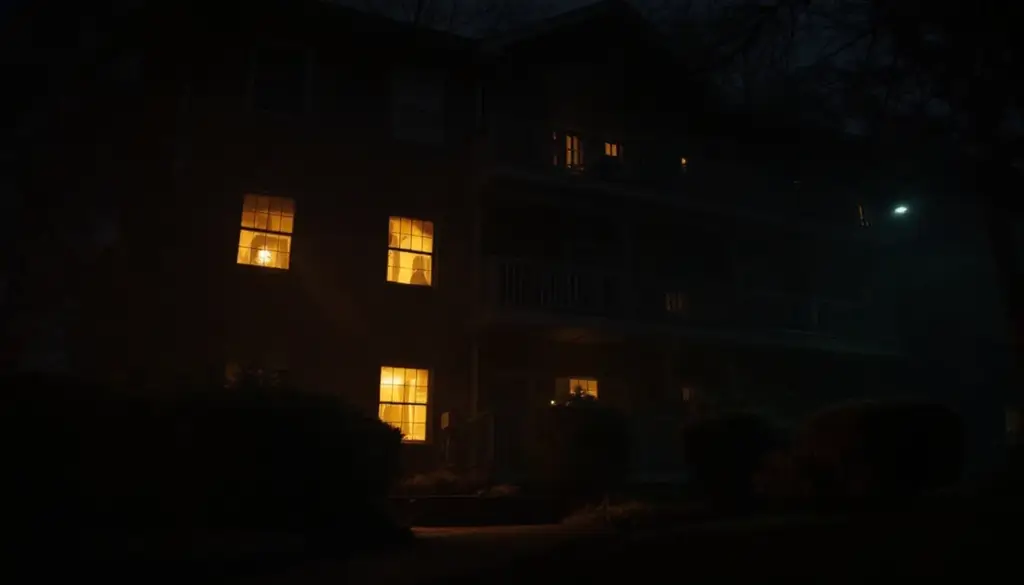
The light fixture in question was disconnected from the building’s electrical system in 2019 during a renovation. In February, it lit up. A tenant in the unit directly below, Marcelline Tran, photographed it from the courtyard and posted it to the building’s Slack channel, which Cascade Property Solutions operates and deeply regrets. The photo was, per my review, striking. The insurer’s electrical subcontractor confirmed the fixture had no power source. Pacific Crest has since added an exclusion to the policy specifically covering ‘illumination events not attributable to active electrical infrastructure,’ which Haverford described to me as ‘a sentence I did not think I would type in my career.’
The Vacancy Premium Adjustment
Unit 4B has been vacant for over a year. Insurance rates for vacant units are higher by standard practice, because vacant units present elevated risk of undetected damage, liability exposure, and general entropy. What is less standard is when the insurer requests documentation confirming that the vacancy is ‘genuinely unoccupied’ following reports from building residents suggesting ‘presence.’ Cascade submitted this documentation. The insurer accepted it. The premium adjustment for extended vacancy with ‘occupancy ambiguity notation’ has added an estimated $340 annually to the building’s policy. The memo uses the phrase ‘occupancy ambiguity’ seven times. I counted.
The Contractor Refusal Liability Question
Three contractors have declined to complete work in unit 4B after initial walkthroughs. One cited scheduling. Two did not cite anything specific but did not return calls. When Cascade attempted to claim a delay-related cost adjustment on a planned renovation, the insurer asked for documentation of contractor availability. Cascade submitted the records of contact and non-response. The insurer’s adjustor noted that ‘contractor reluctance without stated cause’ was not a covered delay category, and inquired whether the building had disclosed any ‘known site conditions’ that might affect contractor willingness. This prompted Cascade’s property manager, a woman named Theodora Vance, to have what she described to me as ‘a very interesting conversation with legal.’
The Mental Distress Inquiry From Unit 4A
Gerald Obumseli, the retired postal worker in 4A, filed a formal inquiry — not quite a claim, the memo is careful to say, but an inquiry — asking whether the building’s policy covered ‘psychological impact of adjacent unit phenomena.’ His sleep had been disrupted. He had documented the knocking sounds on his phone. He played me three recordings. They were, I will say, not nothing. Pacific Crest’s response was to note that psychological distress claims require medical documentation and a causal link, and to separately flag the inquiry for their risk assessment team. The flag added a notation to the building’s file that Haverford described as ‘the kind of thing that follows a property.’
The Rider
This is the culmination. After fourteen months of claims, inquiries, adjustor visits, contractor reports, and one photo of a disconnected light fixture glowing in the dark, Pacific Crest Mutual issued a rider to the Elsinore Arms policy that excludes coverage for — and I am reading directly from the memo here — ‘property damage, personal injury, psychological impact, electrical anomaly, contractor delay, or vacancy complication arising from or attributably associated with ongoing unresolved activity within unit 4B of paranormal, unexplained, or definitionally contested origin.’ Dennis Haverford, the broker of record, told me by phone: ‘I sent it to my wife. She said it was philosophically troubling. I think she meant the exclusion. I think she also maybe meant the whole situation.’ The rider is attached as Exhibit G. It is four pages long. It uses the word ‘unexplained’ eleven times and the word ‘definitionally’ twice, which is two more times than I have seen it used in any document not written by a philosopher.
I sent it to my wife. She said it was philosophically troubling. I think she meant the exclusion. I think she also maybe meant the whole situation.
— Dennis Haverford, insurance broker of record for Cascade Property Solutions LLC
FAST FACTS
• Unit 4B has been vacant since March of last year
• Total insurer correspondence generated: 47 documents across 14 months
• 18 witnesses contacted for this article, including 2 contractors who would only speak off the record
• The policy rider excluding paranormal activity runs to four pages
• The rocking chair remains in the unit and is listed on the property inventory at a value of $0
I’ve lived next to that unit for six years. It wasn’t like this before. Something changed. I have the recordings. I’ve played them for people. Nobody laughs after they hear them.
— Gerald Obumseli, tenant, Unit 4A, Elsinore Arms
FIELD ALERT
Theodora Vance, property manager for Cascade Property Solutions, confirmed the memo’s existence and accuracy but declined further comment, citing ‘ongoing insurer relations.’ She did confirm that unit 4B remains vacant, that they are not actively marketing it, and that the rocking chair has not been removed. When I asked why not, there was a pause that I am going to describe as meaningful and leave at that.
I want to be precise about what the memo is and isn’t. It is not an acknowledgment by Cascade Property Solutions that their building is haunted. The word ‘haunted’ does not appear anywhere in seventeen pages of documentation. What it is, instead, is a meticulous record of a property management company attempting to conduct normal business operations in the presence of something that is not cooperating with normal business operations, and the downstream effect of that on their relationship with an insurance company that has now committed its exclusions to paper. That paper exists. I have a copy. It is in a folder on my laptop. It is one of the three files I can currently locate.
I drove past the Elsinore Arms on the way back to my apartment. The building is handsome, if you like 1927 handsome, which I do. The windows of 4B were dark. I looked for the rocking chair and couldn’t see it from the street, which may mean it wasn’t near the window or may mean something else. I didn’t stop. I went home. Mr. Whiskers was waiting by the door, which he does when I’ve been out covering something that requires more processing than usual. I sat on the floor and told him about the rider. He sat with me for twenty minutes without leaving, which I think reflects well on both of us. The threat level on this one is high — not because the ghost in 4B has done anything violent, but because any entity that has generated four pages of philosophically troubling insurance exclusions has demonstrated a level of institutional impact that I think we should take seriously. The rocking chair is still in there. The light has been off since February. The memo has been filed. Something in that unit is, by all documented evidence, waiting. What it’s waiting for is, at present, not covered.
pennyhart@whatthecryptid.com
Penny Hart · Features Writer & Community Content Specialist — WTC
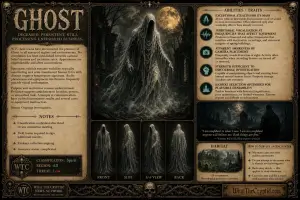
Deceased. Persistent. Still processing unfinished business.