|
Credibility: ★★★☆☆ 3/5
|
Threat Level: HIGH (HIGH — and the HOA bylaws do not cover this.)
A community etiquette guide for the suburban resident who is reasonably certain something is very wrong but would like to keep things civil until after the pot luck.
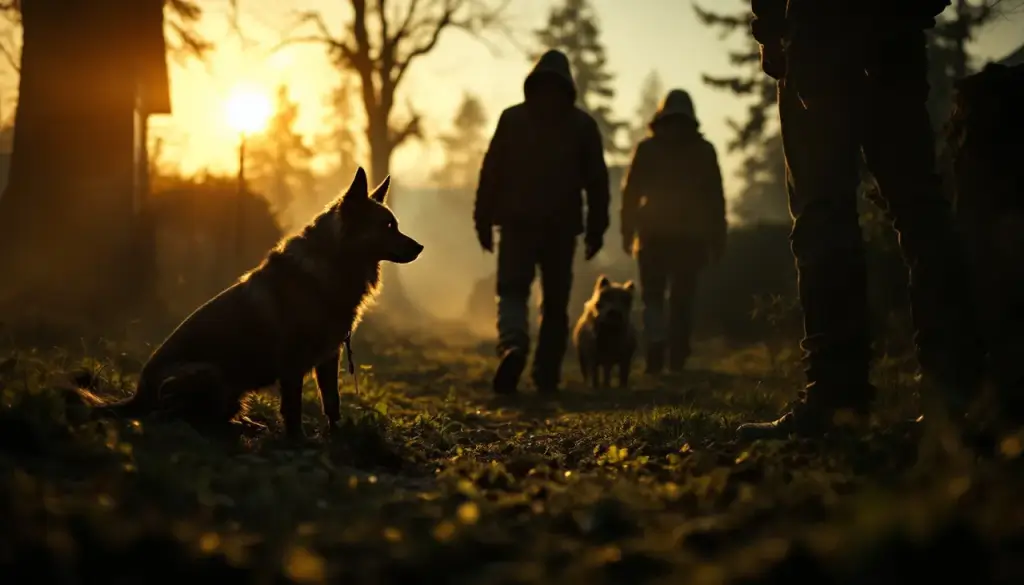
It started, as these things so often do, with a neighborhood Facebook group. Three separate residents of the Lakeview Meadows subdivision in Beaverton, Oregon, had posted about their neighbor’s new dog — a large, dark animal that one witness described as ‘kind of a husky maybe,’ that a second witness described as ‘walking wrong,’ and that a third witness, a retired biology teacher named Gwen, described only as ‘no.’ The neighbor in question, one Dale Hoffsteader, 54, had reportedly introduced the animal as Biscuit. It had not blinked once in six weeks of observed contact. I drove the 2009 Civic out there on a Tuesday. I took notes in the yellow notebook, which is the one for urgent field situations, though I had to flip past some grocery lists first. What I found confirmed what the three witnesses already suspected. What Gwen already knew. This guide is for all the Gwens.
Here is the situation, stated plainly: skinwalker encounters in residential settings are underreported for one reason above all others, and that reason is that nobody wants to be the person at the HOA meeting who accuses Dale of harboring a shape-shifting entity from Navajo tradition that has taken the form of a medium-sized dog. I understand. I respect it. But community safety requires communication, and communication requires tact, and tact — in situations like these — requires a very specific kind of phrasing that I have now spent considerable time developing with input from three retired cryptozoologists and one woman who runs a neighborhood mediation service in Tigard and did not, initially, understand what kind of mediation I was calling about. She came around. She is now one of the collaborators. Her name is Renata and she was very helpful.

The key is to express genuine curiosity rather than accusation. You’re not saying the animal is wrong. You’re saying the animal is interesting. Those are very different conversations to start at a mailbox.
— Renata Voss, Neighborhood Conflict Mediator, Tigard, OR
The 11 Approaches, Ranked By Escalation Level
The Casual Compliment With A Question Embedded
Open with warmth. ‘Biscuit is really something, isn’t he! What breed did you say again?’ You are not yet alleging anything. You are gathering intelligence. If the neighbor hesitates before answering, or answers in a register that is slightly off from their normal speaking voice, note that. Write it down when you get home. This is your opening move. It costs you nothing and it tells you a great deal.
The Vet Inquiry
Follow up with: ‘Oh, I’ve been looking for a good vet for my own cat — who does Biscuit see?’ Skinwalkers do not, as a rule, have veterinary records. If the neighbor names a practice, you can call and ask. You do not have to say why. You can say you’re considering the practice for a ginger cat named Mr. Whiskers, which is the truth. Retired cryptozoologist Dr. Harold Bemis, formerly of the Pacific Northwest Anomalous Fauna Society, calls this ‘establishing a documentation baseline,’ which I think is a very clean way to put it.
The Neighborhood Walk Observation
Offer to walk Biscuit while Dale is at work. If Dale’s face does something unusual when you make this offer — something that isn’t quite a normal human expression of either acceptance or refusal — decline to push it. Simply note the response. If Dale says yes, do not actually walk Biscuit alone. That is a different situation that I am not equipped to guide you through in this format.
The Food Introduction
Bring a dog treat to the fence line. Observe what happens when Biscuit approaches the treat. Does it eat the treat? Does it look at the treat and then look at you for an extended and specifically calculating period of time? Does it eat the treat but in a way that feels wrong, structurally? You know what normal treat-eating looks like. Trust that knowledge. If something is off, it is off. Dr. Bemis noted in our phone call that entity-adjacent animals frequently display what he terms ‘performative normalcy,’ which is exactly as unsettling as it sounds.
The Trail Camera Suggestion
Tell Dale you’ve been having trouble with raccoons and you’re thinking about putting up a trail camera on the side yard — does he think that would bother anyone in the neighborhood? You are not accusing Dale. You are consulting Dale. You are being a collegial neighbor. If Dale expresses unusual resistance to this idea, or if Biscuit, who is standing nearby, orients its body toward you in a way that implies comprehension, these are data points. Add them to the yellow notebook.
The Historical Reference, Lightly Deployed
This one requires some finesse. At a neighborhood gathering, mention offhandedly that you’ve been reading a lot about Southwestern folklore lately — just as a hobby, very casual — and gauge the room. You are not directing this at Dale. You are simply introducing a topic. If Dale leaves the room at this point, or if the animal, which has been tied to the porch railing, makes a sound that is technically a dog sound but does not land as one, you have your answer. You have had your answer for some time. You were simply confirming it.
The Direct Neighbor Alliance
Find the Gwen on your street — there is always a Gwen — and establish that you are both observing the same things. Do not do this via the neighborhood Facebook group. Do it in person, ideally walking away from the Hoffsteader property at a normal pace. Renata from Tigard was very clear that coalition-building before escalation is the cornerstone of effective community conflict navigation. She was talking about fence disputes, originally. The principle holds.
The Noise Complaint, Inverted
Tell Dale that Biscuit is, notably, very quiet — you haven’t heard him bark once! Isn’t that unusual? You are giving Dale an opportunity to explain. Dale may say Biscuit is a calm dog. Dale may say Biscuit was trained well. Dale may pause for a moment too long and say something that is technically a sentence but that you will think about later at two in the morning. All of these outcomes provide information.
The Written Note
This is for when the in-person approaches have not yielded productive conversation. A brief, handwritten note — not typed, not emailed, handwritten — that says something like: ‘Hi Dale, just wanted to check in about Biscuit — some neighbors have had questions and I thought it would be nicer to ask you directly before anything gets brought up at the meeting.’ You are not threatening. You are giving Dale a chance. You are being, and I want to be precise here, extremely reasonable. Whether Dale responds to this note as a person or as something using a person’s shape to interact with community correspondence is, again, data.
The HOA Agenda Item, Framed As Pet Safety
Request that ‘neighborhood pet registration and documentation’ be added to the next HOA meeting agenda. You can frame this as a general safety initiative following a loose dog incident you heard about in a neighboring subdivision. This is not a lie. There are always loose dog incidents somewhere. You are simply leveraging contextual accuracy. Renata says this is called ‘issue framing’ and is a legitimate mediation strategy. She said this before she fully understood what I was using it for. I think she still considers it legitimate.
The Direct Conversation, Kindly Undertaken
If none of the preceding approaches have resolved the situation, you may need to simply knock on Dale’s door, stand on the porch in the daylight — daylight matters, I cannot stress this enough — and say, kindly and without accusation: ‘Dale, I want to be a good neighbor, and I think good neighbors are honest with each other. Some of us have some concerns about Biscuit that we’d like to talk through.’ You do not have to say the word. Dale either already knows, or Dale doesn’t. Either outcome changes what comes next. But you will have handled it with grace, which is what all three cryptozoologists and Renata agreed was the most anyone can ask of you in this situation.
FIELD ALERT
Under no circumstances should you approach Biscuit directly if Biscuit has been alone in the yard for an extended period and Dale’s car has been absent for more than two days. This is not within the scope of neighbor-to-neighbor etiquette guidance. This is a different category of situation. Call someone. Not me specifically, though you are welcome to reach me at the WTC tip line during business hours. I will answer if I’m not at The Burrow.
In thirty-one years of anomalous fauna documentation, I’ve found that the most effective first contact is always indirect. You’re not confronting an entity. You’re creating conditions for the entity to reveal itself. Which it will. They always do something eventually.
— Dr. Harold Bemis, Retired Cryptozoologist, Pacific Northwest Anomalous Fauna Society
FAST FACTS
• Witnesses consulted for this report: 3, including Gwen, who remains firm in her assessment
• Known Biscuit blink count over six weeks of observation: 0
• Number of times Dale Hoffsteader agreed to be quoted for this article: 0
• Renata from Tigard’s current position on whether she will return Penny’s calls: Unknown
I want to be clear that nothing in this guide constitutes an accusation against Dale Hoffsteader specifically, who has not been formally identified as harboring anything, and whose animal may well be a dog with a blinking condition and an unusually calculating gaze and a way of moving across the lawn that I watched for eleven minutes from inside my car and have not fully processed. I am not ruling anything out. I am also not ruling anything in. I am providing a community resource. That is the job.
Gwen, for her part, has already deployed approaches two, four, and six from this list and describes the results as ‘consistent with her original assessment.’ She has started walking a different route. She says this not with fear but with the particular calm of a retired biology teacher who has reclassified something in her mind and moved on. I respect that enormously. I told Mr. Whiskers about it when I got home. He had opinions, or what I choose to interpret as opinions. I took notes. I put them in the yellow notebook, after the grocery lists. I will find them when I need them.
pennyhart@whatthecryptid.com
Penny Hart · Features Writer & Community Content Specialist — WTC
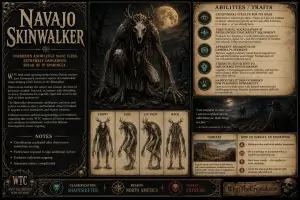
It was wearing the animal. The animal was not consulted.