|
Credibility: ★★★★☆ 4/5
|
Threat Level: HIGH (HIGH — and the room in question is probably yours.)
Seven witnesses. One room they all keep mentioning. A checklist you will wish you hadn’t needed.
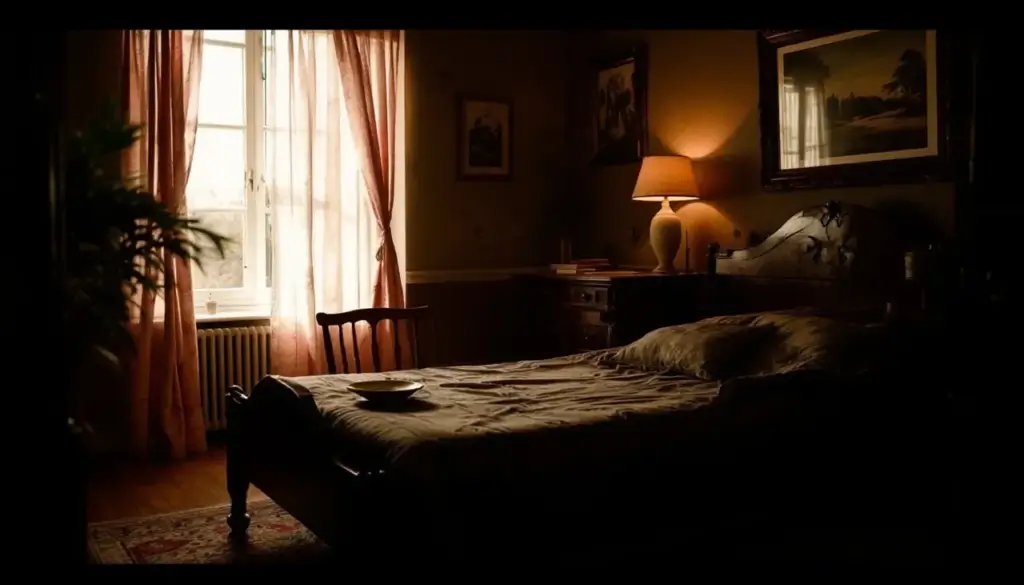
All seven witnesses said the same room without being asked. That’s the thing that keeps coming back to me as I go through my notes from the past three weeks. I asked each of them separately, on different days, in some cases in different counties, and every single one of them paused in the same place — not hesitating, exactly, more like locating something — and then named the room. Not the house. The room. Shadow People researchers have documented preference behavior before, but the consistency of the reporting here is unusual enough that I drove back to Pendleton and added a new section to the timeline. Hal has not yet filed a safety report about it. I expect he will.
Sign One: The Room Is Always Slightly Colder Than It Should Be
Not dramatically colder. That’s the first thing to understand. We’re not talking about a room where you can see your breath or where the thermometer produces a reading that would end a conversation. We’re talking about a differential of two to four degrees Fahrenheit, persistent across seasons, not explained by the ductwork, not explained by the windows. Three of the seven witnesses had lived in their homes for over a decade before noticing it. One of them — a retired building inspector from Boardman — told me he had checked the insulation himself, twice, and found nothing. He had a very particular way of saying the word ‘nothing.’ I wrote it down in shorthand and I’ve looked at it several times since.

I’ve inspected buildings for thirty-one years. I know what a cold room looks like. This isn’t that. This is something that has decided to be cold.
— R. Callum, retired building inspector, Boardman, OR
Sign Two: Peripheral Movement That Stops When You Turn
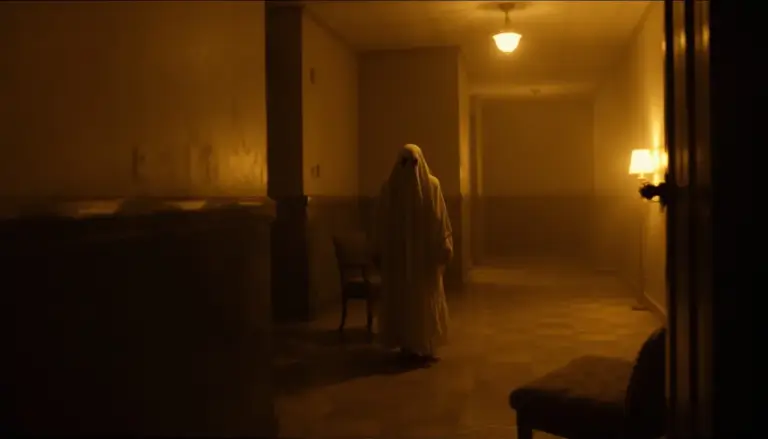
This is the one most people recognize first, and the one they’re most likely to talk themselves out of. Five of the seven witnesses described it identically: movement registered at the edge of vision, in the doorway or along the far wall, that resolves to nothing when you look directly. The standard explanations — fatigue, ambient light, pareidolia — are not wrong, exactly, but they don’t account for the specificity of location. It’s not movement anywhere in the house. It’s movement in the room. One witness, a schoolteacher who asked me not to use her name, said she had started walking into the room sideways in an attempt to catch it directly. She said this without apparent embarrassment. I respected that.
Sign Three: Your Pets Refuse To Enter
Four of the seven witnesses had dogs or cats. All four reported the same behavior: the animal will approach the doorway and stop. Not growl, not bark, not display anything that reads as alarm. Just stop, at the threshold, and decline to proceed. One witness described her cat sitting at the door of the room for forty minutes without moving, which she found more distressing than outright avoidance would have been. I don’t have pets, for reasons that have nothing to do with this article, but I’ve documented enough animal behavior in field conditions to know that a stopped animal is a different thing than a frightened one. A stopped animal is paying attention to something specific.
FIELD ALERT
If you are currently attempting to count how many Shadow People are in the room: stop, record your number, and do not recount. Researchers describe the practice of recounting as ‘inadvisable’ and, when pressed, ‘something we prefer not to discuss in terms of outcomes.’
Sign Four: You Start Avoiding The Room Without Deciding To
This is the sign that took me longest to write up cleanly, because it requires sitting with something uncomfortable about how behavior changes before awareness catches up to it. Six of the seven witnesses, when I asked them to reconstruct their movements in the weeks before they contacted WTC, realized they had been routing around the room. Not dramatically. Not in a way that disrupted daily life. One woman realized mid-sentence that she had been using a bathroom farther from the bedroom for eleven days without registering that she’d made a choice. She stopped talking for a moment and then said, ‘That’s not like me.’ I believed her. It is a particular kind of unsettling to find out that something has been managing your behavior longer than you were aware it was there.
Nobody told me to stop going in there. I just — stopped going in there. And then I tried to remember when I decided that, and I couldn’t find it.
— Witness 4, name withheld, Umatilla County
Sign Five: The Count Changes
This is where I have to be precise about language, because the researchers I spoke to were very precise about language, in the way people are precise when they have reasons. Two witnesses reported counting — independently, without prompting from each other or from any guidance — the number of distinct shapes they could see in the room at a given moment. Both reported that when they counted again, the number was different. Not dramatically different. By one, in each case. Both described the experience of recounting as something they immediately regretted, though neither could articulate exactly why. When I put this to Dr. Felice Arnaud, who studies reported Shadow People encounters at a research institution she asked me not to name in print, she said the finding was ‘inconclusive.’ I asked her to define inconclusive. She said, ‘We prefer not to conclude.’ I asked why. There was a pause that lasted long enough that I wrote down the length of it. I will not be publishing that number.
FAST FACTS
• Witnesses interviewed: 7
• Witnesses who identified the same room without prompting: 7
• Average temperature differential reported: 2.8°F
• Animals who crossed the threshold voluntarily: 0
• Researchers who would go on record about Sign Five: 0
• Number of times I’ve driven past that room on Forest Service Road 2840 this month: I’m not putting that in a factbox
I want to be clear that I am not in the business of telling people what to do with their homes. That is not what WTC does, and it is not what I do. What I can tell you is that all seven witnesses are credible, their accounts are consistent in ways that are difficult to attribute to coordination or coincidence, and that the room in question — whichever room it is, in whichever house you are reading this in — has almost certainly been the same room for longer than you’ve been paying attention to it. The cold was there before you noticed the cold. The movement was at the edge of your vision before you started looking. If none of these five signs apply to you, that is genuinely good news. If you read the fifth one and immediately wanted to go count something, I would encourage you strongly to think about whether that impulse is yours. I’ve been thinking about that question since I left Umatilla County. I haven’t answered it yet.
maravane@whatthecryptid.com
Mara Vane · Senior Investigative Reporter — WTC
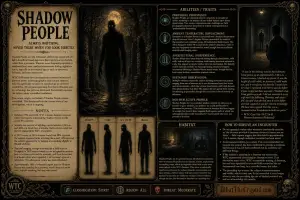
Observed in 47 countries. Yet to explain themselves.