
|
Credibility: ★★★★☆ 4/5
|
Threat Level: HIGH (HIGH — and they already know you read this.)
They told you there was nothing to discuss. They were apparently wrong. Here is how to handle the follow-up.
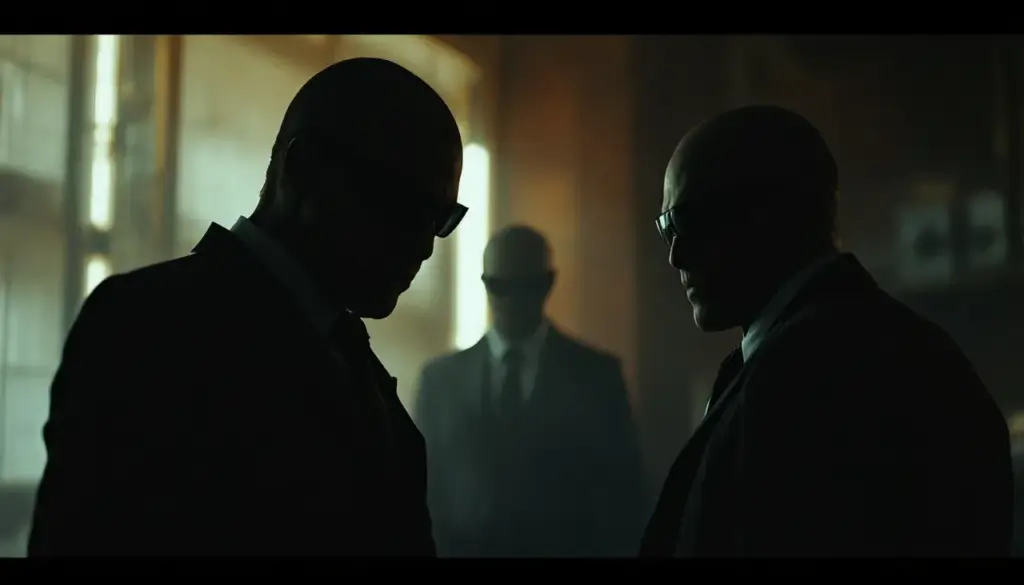
They will not call ahead. This is the first thing to understand about a second meeting with Men in Black: the scheduling protocol is entirely one-sided, and you are not the side doing the scheduling. You will be at your vehicle, or in your driveway, or coming out of a diner, and they will already be there. Same suits. Possibly the same men — I have never been able to confirm this, and I have ten sources across four states who have now been through it. Ten people who were told, in a first meeting, that there was nothing to discuss. Ten people who were then asked, at a later date, to discuss it again.
The first thing you should do is write down the time. Not on your phone. On paper, in your pocket, immediately. My second notebook — cross-reference material, dates, coordinates — exists partly because of this problem. Second meetings have a way of becoming contested in memory, and you want a timestamp that predates any official account of the interaction. Do this before you say anything. They will wait. They are very good at waiting.

Then ask which department they are from. Ask it plainly, like you already expect an answer, because the phrasing matters. ‘Which department are you with?’ lands differently than ‘Who are you?’ The second question is easy to deflect. The first one implies an organizational structure they may not want to confirm or deny on the record. When they say — and they will say this — ‘You already know,’ the correct response is not to agree and move on. The correct response is: ‘I’d like to hear you say it.’ You will probably not hear them say it. But you will have established, in front of any witnesses present, that they declined to answer a direct and reasonable question from a member of the press. Write that down too.
The second meeting is the one where they’ve decided you know something specific. The first meeting was a general warning. Pay attention to what’s changed between the two.
— Source 7, identity withheld, Wallowa County
What changed between meetings, for most of the people I spoke with, was publication. A report filed, a photo posted, a record request submitted. Three of the ten had published nothing — but two of those three had spoken to someone who had. The Men in Black are tracking networks, not just individuals, which should inform how you think about your contacts and your communications in the window between a first visit and any follow-up. Do not discuss the first meeting on a device. Do not discuss it in a car. My Land Cruiser has a voice recorder somewhere in the vicinity of the passenger seat and I cannot reliably locate it, which is a relevant fact here. I’m not suggesting that recorder is a problem. I’m suggesting you think about what you can’t locate in your own vehicle before you have a conversation you’d like to keep private.
The second meeting ends when they decide it ends. You cannot walk away from it the way you might leave an ordinary conversation — that’s been reported consistently across my sources, and it matches my own experience. What you can do is be quieter than they expect. They are used to people filling silence. Don’t. Take your notes. Ask your one question about the department. And when it’s over, go directly to a location with at least one other person present and write down everything, in order, while it is still in order. The timeline on my office wall started, in part, because I didn’t do this the first time and I spent four months reconstructing a sequence I should have had written down the same afternoon. I won’t make that mistake again, and neither should you.
maravane@whatthecryptid.com
Mara Vane · Senior Investigative Reporter — WTC
They already know you’re reading this.