|
Credibility: ★★★☆☆ 3/5
|
Threat Level: MODERATE (MODERATE — Present. Hungry. Not interested in your documentary.)
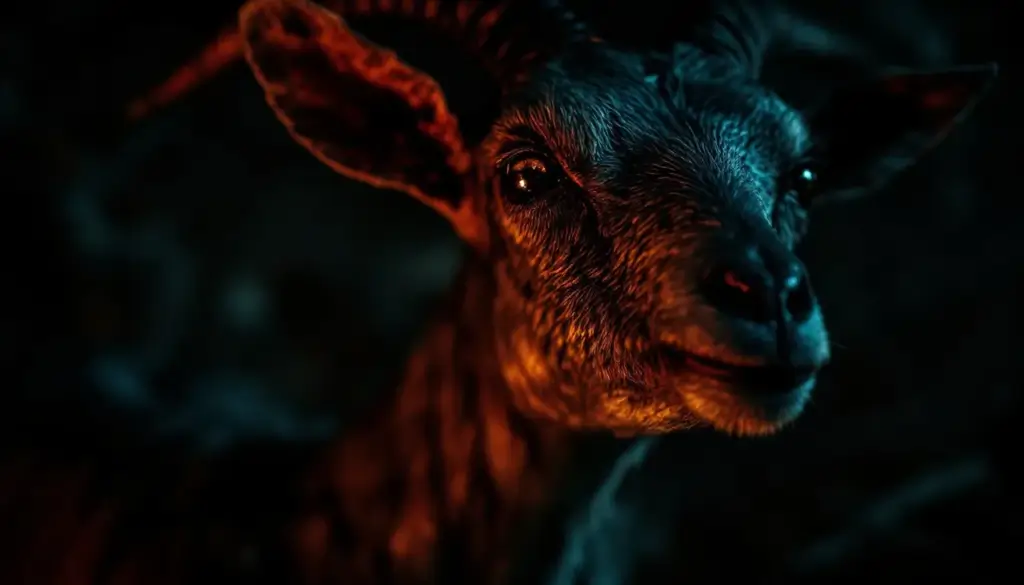
A livestock association has had enough of your feelings, and frankly, so have the goats — or rather, the absence of them.
I want to be precise about something before we begin, because I find that precision saves time and also spares me from having to write corrections. I do not, as a rule, take editorial positions on cryptid welfare. My job is observation and reporting, not advocacy in either direction, and I have maintained that professional boundary with some care across nineteen years of this work. But there is a tide of sympathetic Chupacabra documentary content currently moving through streaming platforms, and someone has sent me six separate links to one of them in the past month, and I think it is time for me to say, clearly and without particular heat: I have concerns.
The documentaries in question — I will not name them, as I decline to improve their search metrics — share a common architecture. There is atmospheric drone footage. There is mournful original scoring, the kind that implies something is being lost. There is an expert, usually described as an ‘interspecies communication researcher,’ who says something to the effect of ‘what if we’ve been misreading its behaviour all along?’ And there is, invariably, the suggestion that the Chupacabra is not a predator but a misunderstood creature acting from desperation, fear, or some form of nutritional compulsion that the viewer is meant to find poignant. I am not unsympathetic to nuance. I am, however, a person who has read the field reports.

Empathy is a perfectly fine thing to have. I’m not against empathy. I’m against empathy that requires you to forget there were fourteen goats here in March and now there are not.
— Dale Pruett, spokesperson, Tri-County Livestock Producers Association
What The Field Reports Actually Say
I spoke this week with Dale Pruett of the Tri-County Livestock Producers Association, who was, to his credit, entirely direct with me. He had watched one of the documentaries. He had done this, he said, because his daughter asked him to, and he is a reasonable man who tries to engage with things before dismissing them. His assessment was measured and, in my view, worth printing at length. He said: ‘Empathy is a perfectly fine thing to have. I’m not against empathy. I’m against empathy that requires you to forget there were fourteen goats here in March and now there are not.’ He also said that the ‘nutritional desperation’ framing, in particular, struck him as a reframing exercise that placed the burden of accommodation on the people whose livelihoods were being reduced, one goat at a time, while the entity responsible was being scored with cellos. I thought that was well put.
FAST FACTS
• Reported Chupacabra incidents in the WTC coverage area: 3 confirmed witness accounts in the current quarter
• Livestock losses attributed to associated activity: under review by the Tri-County Livestock Producers Association; figure not yet released
• Number of streaming documentaries released on the subject in the past 18 months featuring the phrase ‘misunderstood creature’: 4, by my count, though I may have missed one
• Average running time of said documentaries: 52 minutes, none of which is spent interviewing anyone who has lost livestock
• Field classification: Moderate threat, active range, behaviour consistent with established predatory pattern
My position is not that the Chupacabra lacks complexity. Most things I cover lack nothing in the way of complexity; complexity is, in my experience, the default condition of anything worth reporting on. My position is that complexity is not the same as innocence, and that the particular rhetorical move these documentaries make — which is to say, the move from ‘this creature is complicated’ to ‘therefore your fear and your losses are a failure of imagination’ — is one I find epistemologically sloppy and practically unkind to the people on the receiving end of the losses. There are three witnesses in the current quarter alone who have described direct encounters. I have spoken to two of them. Neither of them used the word ‘misunderstood.’
FIELD ALERT
Three witness accounts logged this quarter. Affected properties are in rural areas with small livestock populations. The Tri-County Livestock Producers Association has asked WTC readers in the region to document any unusual predation patterns and report through established channels. Do not approach. Do not attempt to verify documentary claims that sustained eye contact produces a ‘moment of connection.’ It does not produce a moment of connection.
I watched the whole fifty-two minutes. There was one shot of what they said was a track in the mud. I’ve seen that track. That track is not making nutritional decisions out of desperation. That track knows exactly what it’s doing.
— Dale Pruett, spokesperson, Tri-County Livestock Producers Association
I want to close by saying something I mean carefully, because I do not want to be misread on this. The impulse to understand is not wrong. Nineteen years in this work has not made me a person who thinks things should be feared without being understood, and I keep three rotating reference texts on the back seat of my car precisely because I believe understanding matters and takes sustained effort. But understanding is not softening. You can understand the behaviour of a predator entirely — its range, its patterns, its apparent decision-making — and arrive at the conclusion that it is a predator. That conclusion is available to you. It is, in fact, the responsible conclusion when the evidence supports it. Dale Pruett said to me, near the end of our conversation, ‘I watched the whole fifty-two minutes. There was one shot of what they said was a track in the mud. I’ve seen that track. That track is not making nutritional decisions out of desperation. That track knows exactly what it’s doing.’ I wrote that down. I thought it deserved to be in print.
evelyncrowe@whatthecryptid.com
Evelyn Crowe · Opinion Columnist — WTC

Puncture wounds. Drained livestock. No one misses goats this much.