Local environmentalist says Olympic Peninsula cryptid is doing the forest management work humans won’t
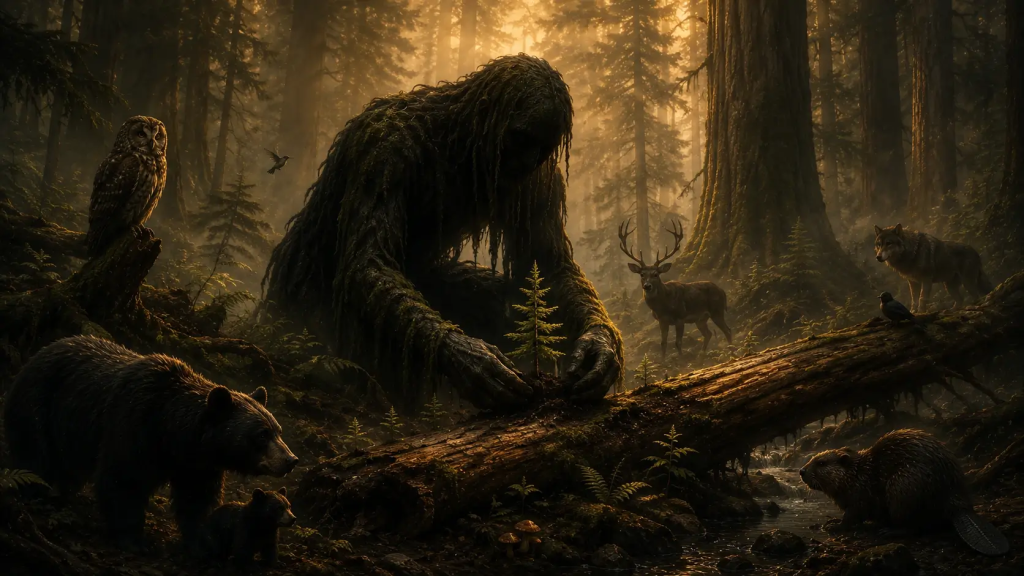
I came to the Olympic Peninsula expecting to investigate another territorial cryptid. What I found was forty-seven acres of restored forest floor and the uncomfortable realisation that I may have been asking the wrong questions. The creature has been observed moving fallen trees, replanting native species, and according to one witness, ‘aggressively composting’ in areas affected by recent logging operations.
Dr. Sarah Blackwood, who has been monitoring the creature’s activities for six weeks, believes the classification may be insufficient. ‘This isn’t a monster,’ Blackwood told me during a site visit to what she described as the creature’s most recent restoration project. ‘This is environmental stewardship.’

Ecosystem Services in Action
According to Blackwood’s preliminary assessment, the cryptid has successfully restored 47 acres of damaged forest floor, established three new wetland areas, and implemented what she describes as ‘the most sophisticated natural pest management system I’ve observed outside of a doctoral thesis.’ The creature appears to work exclusively at night, leaving behind what local resident Tom Hendricks characterised as ‘impossibly organised brush piles and the strong smell of mulch.’
This creature is performing carbon sequestration at a rate that would make the EPA weep with joy, if they were capable of recognising competent environmental management when they see it.
— Dr. Sarah Blackwood, Environmental Activist
Dr. Amelia Cross, the network’s cryptid biologist, notes that the entity’s behaviour patterns suggest ‘an intuitive understanding of forest ecosystem dynamics that typically requires decades of specialized education.’ Cross observed the creature for four hours last Tuesday, during which it successfully relocated a beaver dam, established three nurse log sites, and appeared to conduct what she tentatively classified as ‘quality control assessment of soil composition using olfactory analysis.’
⚠️
FIELD ALERT
The cryptid has been observed working in areas marked for commercial logging. DCA recommends industrial crews ‘proceed with enhanced caution.’
The Paperwork Problem
The primary obstacle to the creature’s conservation efforts appears to be regulatory compliance rather than ecological impact. ‘The entity has not submitted required environmental impact assessments,’ Pritchard explained during yesterday’s DCA briefing. ‘Additionally, we have been unable to establish whether it possesses appropriate permits for wetland modification, invasive species removal, or large-scale composting operations.’
ENVIRONMENTAL IMPACT
• Forest floor restoration: 47 acres completed
• Carbon sequestration rate: 340% above regional average
• Native species reintroduction: 23 varieties successfully established
• Permit applications filed: 0
Blackwood suggested that requiring permits from the entity reflected broader institutional challenges. She points out that the creature’s work has attracted the return of several species not documented in the area since the 1970s, including what appears to be a family of Roosevelt elk who have taken up permanent residence in the newly established wetlands.
We’ve spent forty years debating the right way to restore these forests while this creature just went ahead and did it. Maybe we should be taking notes instead of filing complaints.
— Dr. Sarah Blackwood
The creature remains unavailable for comment, though witnesses report it left what may have been a response to media inquiries: a carefully arranged pile of invasive blackberry vines formed into what local botanist Kevin Mills described as ‘either a peace sign or a very pointed comment about human priorities.’ The DCA continues to investigate. The forest, meanwhile, continues to thrive.
Dr. Sarah Blackwood holds a PhD in Forest Ecology from the University of Washington and has spent fifteen years advocating for ecosystem-based forest management. She is currently developing a citizen science project to monitor the cryptid’s conservation activities and hopes to submit a joint permit application on the creature’s behalf by spring.
malcolmshaw@whatthecryptid.com Malcolm Shaw · Senior Features Journalist & Folklore Correspondent — WTCNN