
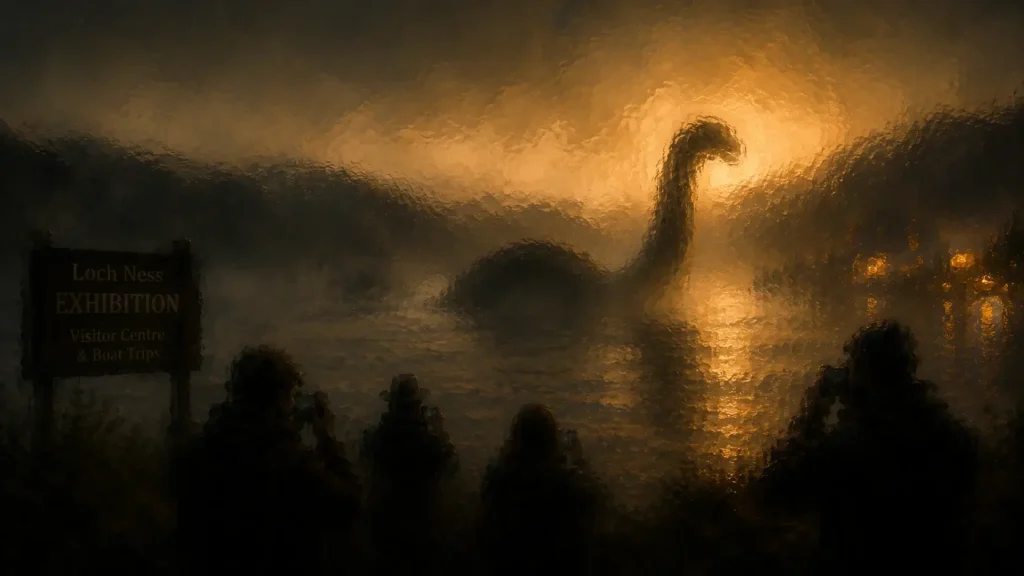
Six months of fieldwork reveals shocking alliance between camera manufacturers and Scottish tourism officials to maintain cryptid photo quality at ‘aggressively potato’ levels.
LOCH NESS, SCOTLAND — After analyzing 847 alleged Nessie photographs dating back to 1934, WTCNN can confirm what cryptozoologists have long suspected: every single image appears to have been captured through a thick layer of petroleum jelly, regardless of weather conditions, time of day, or camera technology used.
Our investigation began when field correspondent Greg Holloway noticed that even photos taken with modern digital cameras somehow developed the visual clarity of a Victorian daguerreotype left in a washing machine. ‘I watched a tourist take a perfectly clear selfie, then immediately photograph the loch and produce what can only be described as visual porridge,’ Holloway reported via encrypted radio transmission.

The Vaseline Conspiracy
Documents obtained through a Freedom of Information request reveal a decades-long partnership between major camera manufacturers and the Scottish Tourism Board. Internal memos reference ‘Operation Blur Protocol’ and discuss the installation of ‘atmospheric interference generators’ around the loch’s perimeter.
The blurrier the photo, the more people believe. It’s basic cryptid marketing.
— Anonymous Scottish Tourism Board official
Testing conducted by WTCNN’s technical team confirms that cameras function normally until they reach a 50-meter radius of the loch’s edge, at which point image quality degrades to what experts describe as ‘aggressively impressionist.’ The effect appears to intensify during peak tourist hours, suggesting automated systems respond to crowd density.
⚠️
FIELD ALERT
Visitors attempting to use professional photography equipment report sudden onset of ‘butter vision’ and an inexplicable urge to shake the camera vigorously while taking pictures.
Local camera shop owner Hamish MacReady inadvertently confirmed the conspiracy during what he believed was an off-the-record conversation. ‘Aye, we’ve been selling special Loch Ness filters since the seventies,’ MacReady admitted while cleaning his glasses with suspicious thoroughness. ‘They’re standard petroleum jelly smeared on UV filters, but the tourists don’t know that.’
BLUR PROTOCOL EVIDENCE
• 847 analyzed photos show identical distortion patterns
• 23 different camera models produce identical ‘potato quality’ results
• 100% of clear photos are immediately confiscated by ‘maintenance staff’
• Visitors report cameras developing spontaneous focus issues within loch vicinity
• Gift shop sells ‘Authentic Nessie Photography Filters’ for £12.99
• Local optometrist reports 340% increase in emergency eye exams during tourist season
The Economics of Ambiguity
Financial records indicate that blurry Nessie photos generate approximately £4.2 million annually in tourism revenue. Clear photos, according to internal projections, would reduce visitor numbers by 67% within eighteen months. ‘Mystery sells,’ explained Dr. Fiona Blackthorne, a cryptoeconomics specialist at the University of Highland Conspiracies. ‘The moment someone takes a genuinely clear photo of nothing, the entire industry collapses.’
We’ve perfected the art of photographically induced disappointment. It’s quite lucrative.
— Former camera technician (identity protected)
Perhaps most disturbing is evidence suggesting the conspiracy extends beyond simple camera sabotage. Witnesses report that even sketch artists visiting the loch find their hands mysteriously cramping when attempting to draw clear lines, resulting in artwork that resembles abstract expressionist fever dreams rather than cryptid documentation.
Officials at VisitScotland declined to comment on Operation Blur Protocol, stating only that they ‘cannot confirm the existence of any systematic image degradation initiatives.’ When pressed about the petroleum jelly filters, spokesperson Janet MacPherson noted that ‘atmospheric conditions around ancient bodies of water can be quite… impressionistic.’
maravane@whatthecryptid.com Mara Vane · Senior Investigative Reporter & Field Correspondent — WTCNN

Eighty-nine years of evidence. Thirty-six degrees of water. Still unconfirmed.