
Succubus vs. Missouri Monster: A Field Assessment

WTC Field Assessment #019
A comparative evaluation of two structurally incompatible cryptid entities, one nocturnal and transdimensional, one agricultural and regional, across ten operational categories.
By Malcolm Shaw · Field Assessment #019
Succubus
ClassificationShapeshifter
RegionAll
ThreatHigh
StatusActive
VS
Missouri Monster
ClassificationHominid
RegionNorth America
ThreatModerate
StatusDormant

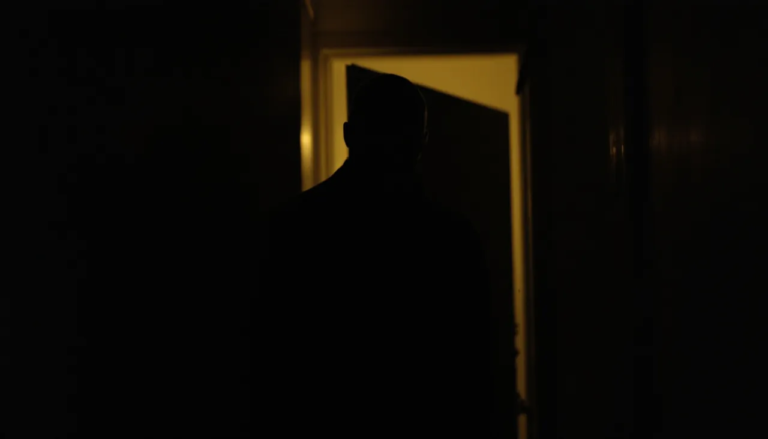
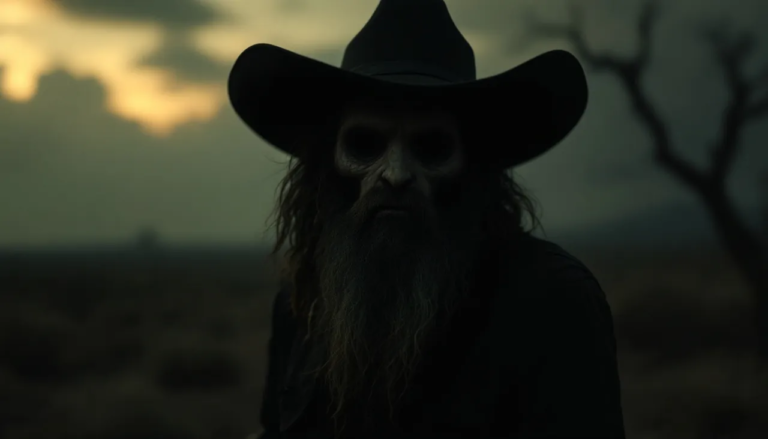
The Succubus and the Missouri Monster occupy opposite ends of the cryptid taxonomy in almost every meaningful respect. One is an ancient, continent-spanning parasitic entity with a theological paper trail stretching back to Mesopotamian clay tablets. The other was primarily reported disrupting livestock in a single Missouri county between 1971 and 1973.

What they share, methodologically, is a resistance to formal documentation — though for entirely different reasons. The Succubus resists documentation because it operates in states of consciousness where note-taking is not typically prioritised. The Missouri Monster resists documentation because it apparently left. This assessment will attempt to evaluate both entities against identical criteria, which is, admittedly, a structurally awkward exercise. The data will speak for itself.

⚠️ Threat Rating

A displaced chicken coop does not constitute a comparable threat profile to continent-spanning nocturnal parasitism.
Succubus
Succubus ◆ Winner
Classified High across all regional offices. The Succubus presents a sustained energy-drain threat with documented cases of prolonged psychological dependency in surviving witnesses.
Missouri Monster
Classified Moderate, with most reported incidents involving property interference rather than direct aggression. One documented case involved a displaced chicken coop.
🔬 Evidence Quality

A hair sample, however ambiguous, outperforms testimony recorded at 3am by someone who is not entirely sure what year it is.
Missouri Monster
Succubus
Evidence is extensive in volume and nearly worthless in forensic terms — composed primarily of witness testimony gathered in post-encounter states of significant cognitive impairment.
Missouri Monster ◆ Winner
Physical evidence includes several footprint casts, a notable hair sample collected in 1972, and at least one photograph described by analysts as ‘suggestive but inconclusive.’
👁️ Evasion Capability

Altering witness perception in real time is operationally superior to simply walking into the treeline and not coming back.
Succubus
Succubus ◆ Winner
Exceptional. The Succubus operates across multiple reported sensory registers and is believed capable of altering witness perception of the encounter in real time.
Missouri Monster
Competent. Momo successfully avoided formal capture across a two-year active period and has not been reliably sighted since 1973, suggesting either effective evasion or permanent relocation.
🌍 Habitat Suitability

A habitat defined as ‘anywhere humans sleep’ represents a meaningful competitive advantage over a fifteen-mile radius in rural Missouri.
Succubus
Succubus ◆ Winner
Optimal. The Succubus has no recorded habitat requirement beyond the presence of a sleeping human, making every inhabited structure on Earth a viable operational environment.
Missouri Monster
Regional and specific. Momo appears adapted to the riverine woodland corridors of Pike County, Missouri, and shows no documented range expansion beyond a fifteen-mile radius.
👤 Witness Reliability

Sober and agricultural is a higher baseline than hypnagogic and recently drained of life energy.
Missouri Monster
Succubus
Consistently low. The encounter conditions — nocturnal, hypnagogic, frequently involving altered states — produce testimony that is vivid, internally consistent, and forensically inadmissible.
Missouri Monster ◆ Winner
Mixed but occasionally credible. The 1972 Terry Harrison sighting involved a witness described by local investigators as ‘sober, agricultural, and not given to embellishment.’
📚 Cultural Footprint

Sumerian clay tablets predate the St. Louis Post-Dispatch by approximately four thousand years.
Succubus
Succubus ◆ Winner
Substantial. The Succubus appears in Sumerian demonology, mediaeval theological treatises, Renaissance woodcuts, and a significant portion of contemporary horror media, representing one of the longest unbroken documentary traditions in the cryptid record.
Missouri Monster
Regional and earnest. Momo generated a dedicated local newspaper archive, a 1972 investigation by the St. Louis Post-Dispatch, and a modest but sincere cryptid tourism economy in Louisiana, Missouri.
👃 Reported Odour

An odour so consistent it receives independent corroboration across multiple witnesses is, from a documentation standpoint, more useful than a strategically variable one.
Missouri Monster
Succubus
Variable and strategically deployed. Witnesses report scents ranging from sulphur to expensive perfume, suggesting olfactory presentation is a deliberate component of the encounter.
Missouri Monster ◆ Winner
Consistent and severe. Multiple independent witnesses describe an odour combining decomposition, wet animal, and something unidentifiable that one 1972 witness documented as ‘wrong in a way I cannot explain.’
🧭 Pursuit Viability

Retrospective pursuit of a dormant hominid is still operationally preferable to pursuing an entity that will compromise your field team on contact.
Missouri Monster
Succubus
Extremely low. The Succubus presents no trackable physical signature, operates in environments hostile to observation, and any field investigator achieving close contact should be considered compromised.
Missouri Monster ◆ Winner
Low but theoretically possible. Momo leaves physical traces including impressions and disturbed vegetation, though the dormant status classification suggests any current pursuit effort would be retrospective.
📋 Documentation Cooperation

Indifference to concealment is a documentation posture the WTC can work with.
Missouri Monster
Succubus
None recorded. There is no case in the WTC archive of a Succubus pausing an encounter to accommodate documentation protocols.
Missouri Monster ◆ Winner
Passive and inadvertent. Momo has left sufficient physical evidence to suggest an indifference to concealment rather than active cooperation, which the WTC treats as a functional equivalent in hominid cases.
🏛️ Govt Acknowledgement

A 1972 sheriff’s wildlife report and a papal bull are both acknowledgements, and neither one did anything useful with the information.
Draw
Succubus
Indirect and historically significant. Several mediaeval ecclesiastical authorities issued formal doctrinal guidance on Succubus encounters, which the WTC treats as a proto-governmental acknowledgement for pre-Westphalian entities.
Missouri Monster
Minimal. A 1972 Pike County Sheriff’s report logged Momo-related complaints under the category ‘wildlife disturbance,’ which constitutes the most recent official documentation.
◆ WTC Field Verdict
Succubus

Across ten categories, the Succubus holds a decisive structural advantage in threat rating, evasion capability, habitat suitability, and cultural footprint — categories that together constitute the operational core of cryptid field assessment. Its millennia-long documentary record, global range, and demonstrated ability to compromise field investigators before they have completed their intake forms represent a profile that Momo, for all its regional sincerity, cannot match.

The Missouri Monster performs credibly in the forensic categories — evidence quality, witness reliability, pursuit viability, and reported odour — and should not be dismissed as a subject of ongoing regional study. Its 1972 hair sample remains one of the more tangible pieces of physical evidence in the North American hominid file. The Succubus wins this assessment, but it wins the way that category of entity always wins: by being impossible to properly evaluate, and remaining active regardless.

I have completed this assessment as requested, but I want to note formally that comparing a regionally dormant hominid to a transdimensional parasitic entity across identical operational criteria is a methodological decision I would not have made, and one that I think flatters neither subject.
— Malcolm Shaw, dissenting note

◆ Share This Report
f Facebook X r/ Reddit
◆ Filed By ◆
Malcolm Shaw
Malcolm Shaw
Senior Features Journalist
View Full Profile →
◆ Ask Evelyn ◆ Advice Column
Evelyn Crowe
Evelyn Crowe
Paranormal Agony Aunt
Evelyn has been answering letters about cryptid encounters, unexplained phenomena, and highly suspicious neighbours since 1987. She has opinions. Many of them.
Submit Your Question
Evelyn is not responsible for advice that attracts additional cryptids
◆ The Shadow Wire ◆ Free Newsletter
Stay Informed.
Stay Suspicious.
Cryptid alerts, field reports, and Greg updates — delivered to your inbox. Irregular frequency. High strangeness.
No spam. Occasional Greg updates. Cryptids not included.
◆ Recent Reports ◆
Lifestyle

◆ WTC Official Newsletter ◆

Join Dead Frequency

WTC's weekly paranormal dispatch. Free. Occasionally unsettling.

Breaking cryptid reports & field investigations
Ask Evelyn — paranormal advice column
Free Cryptid Field Guide on signup

No spam. Unsubscribe anytime. WTC does not share subscriber data with entities.