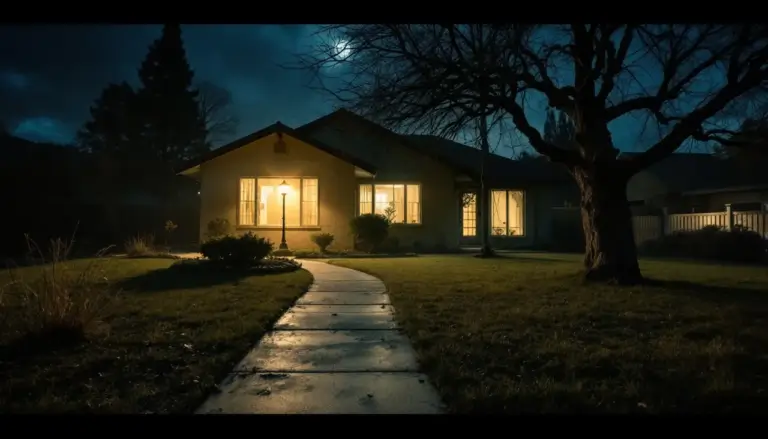

I want to start by saying I’m not writing because I’m worried. I’m writing because I think what’s happening to me is genuinely interesting and I’d like a second opinion from someone who takes this sort of thing seriously.
I’m a wildlife biologist. I study large mammal behaviour in remote areas. I’ve spent the better part of twenty years in places that would frighten most people and I have never once felt that I was in danger from anything I couldn’t classify.
That has changed somewhat.
Eight months ago I began hearing what I can only describe as a secondary heartbeat while working alone in the field. Not my own. External. Rhythmic, slightly slower than resting human pace, and — this is the part I find genuinely interesting rather than alarming — directional. It moves. Not quickly. But it relocates between sessions. I’ve been mapping it.
I’ve attached the map. I realise you can’t see the attachment. I’m describing it instead: the pattern of movement over eight months traces what appears to be a slow, consistent arc around a fixed central point. That central point is my campsite.
I’ve reviewed the acoustic literature. There’s no satisfying explanation. I’ve also reviewed my own health records, which are excellent.
I want to be clear: I am not frightened. I find the whole thing fascinating. I’ve started leaving out water and a small amount of food near the perimeter, which seems — and I acknowledge this is unscientific — appreciated.
I’m planning a longer field stay starting next month. Six weeks. Same location.
What do you think it is?
↓ Reply
Dear Dr. C.W.,
What a delightful letter! It’s so refreshing to hear from someone who approaches the extraordinary with such scientific curiosity rather than panic. Your methodical documentation and mapping efforts are exactly the sort of careful observation that leads to genuine understanding — and in my experience, that patience is often what makes all the difference in establishing a peaceful coexistence.
From your description, it sounds as though you’ve attracted what I would call a Woodland Attendant. They’re remarkably intelligent creatures, territorial but not aggressive, and they do tend to establish these slow, deliberate patrol patterns around areas of interest. The fact that your offerings seem appreciated is an excellent sign — it suggests you’re being evaluated rather than stalked, which is precisely what you’d want in this situation. The directional heartbeat is their way of announcing their presence; think of it as a form of introduction that simply takes several months to complete.
The fact that your offerings seem appreciated is an excellent sign — it suggests you’re being evaluated rather than stalked.
For your extended stay, I’d recommend continuing the water and food offerings, perhaps adding a small bundle of cedar if any grows in your area. Keep your movements predictable and avoid sudden changes to your routine. Most importantly, trust your instincts — you’ve already demonstrated remarkable intuition by recognizing this as fascinating rather than threatening, which tells me you’re exactly the sort of person these entities choose to reveal themselves to.
Do write again after your six-week stay. I suspect you’ll have even more interesting observations to share, and I’d be curious to know if the pattern shifts during your extended presence.
Warmly yours,
Evelyn